
Introduction
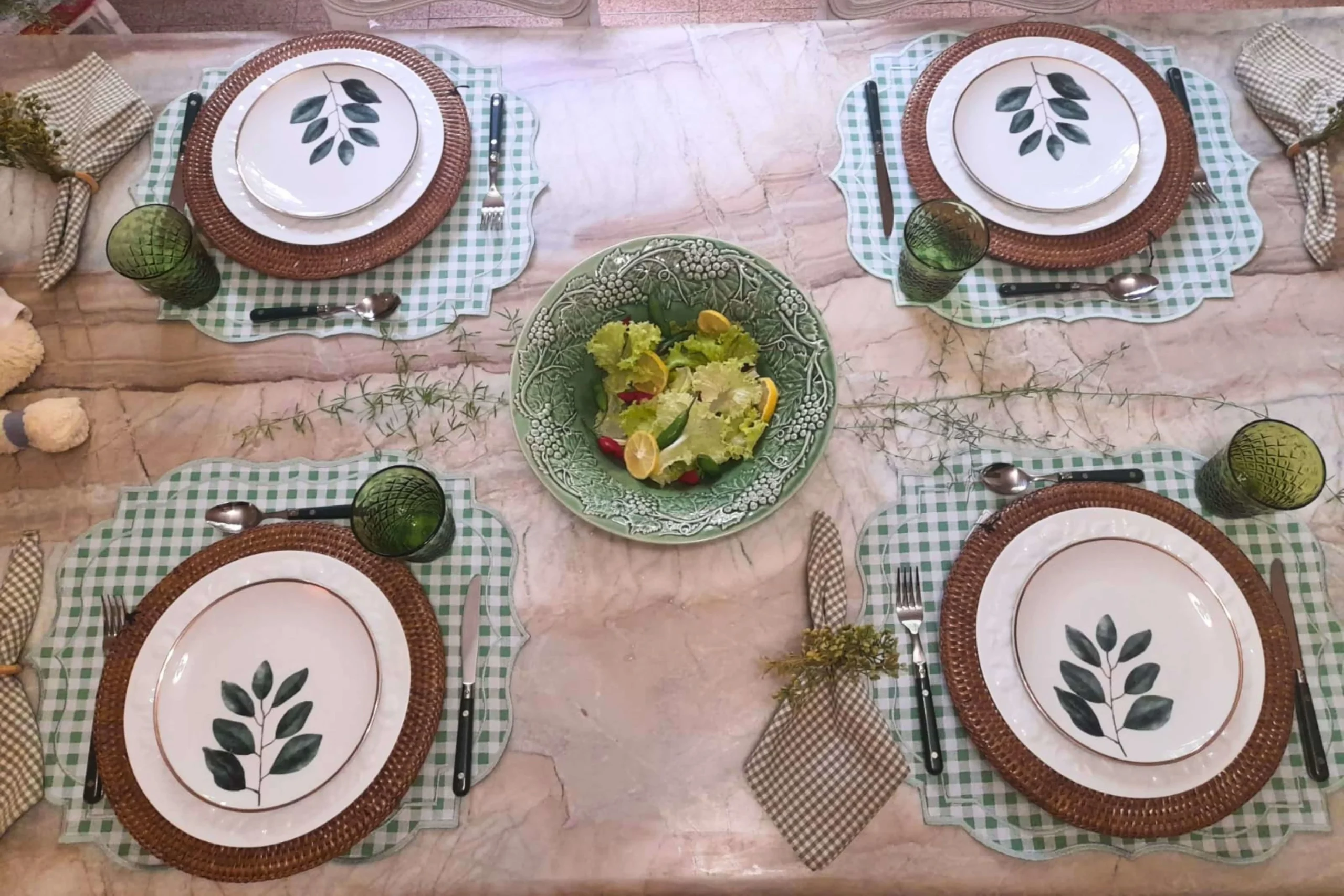
A green gingham placemat table setting is a simple yet elegant way to create a fresh and inviting dining atmosphere. By combining classic patterns, natural textures, and soft green tones, it becomes possible to design a table that feels both relaxed and refined.
In this table, gingham placemats serve as the visual foundation, layered with rattan chargers, botanical porcelain plates, and textured green glassware. The result is a composition that feels effortless, balanced, and naturally welcoming.
Creating a Fresh and Natural Table Setting
Designing a table around a simple element—like a gingham placemat—can transform everyday dining into a visually appealing experience. Instead of relying on elaborate decorations, the focus is placed on texture, layering, and subtle color harmony.
This table uses a soft green palette inspired by nature, combining botanical motifs with woven materials and light marble surfaces. The overall effect is calm, inviting, and perfect for casual meals or relaxed gatherings.
Key elements that define this table include:
• green gingham placemats that establish the color palette
• woven rattan chargers adding warmth and texture
• botanical porcelain plates creating a refined focal point
• textured green glassware enhancing the fresh color scheme
• natural greenery used as subtle decorative accents
Together, these elements create a table that feels cohesive without appearing overly styled.
The Foundation: A Gingham Placemat
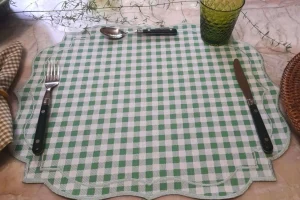
Every well-designed table begins with a strong visual foundation. In this composition, the green gingham placemat sets the tone for the entire table.
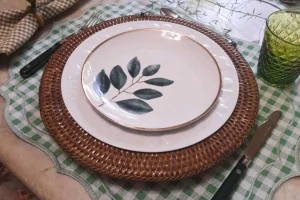
green-gingham-placemat-table-setting-
The gingham pattern introduces a classic countryside aesthetic while the green color brings freshness and vibrancy. Placemats like this are especially effective because they define individual place settings while also contributing to the overall style of the table.
Gingham patterns are timeless and versatile, making them suitable for many table styles:
• casual everyday dining
• garden-inspired tables
• spring and summer gatherings
• rustic or farmhouse table settings
Because the pattern is simple and recognizable, it pairs easily with both natural materials and elegant tableware.
The gingham placemat therefore acts as the visual anchor that allows the rest of the table to develop naturally around it.
Adding Texture with a Rattan Charger
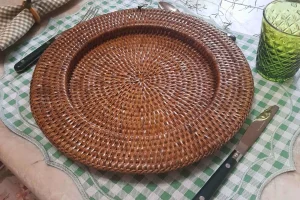
Once the base layer is established, introducing texture helps add depth to the table. In this setting, the rattan charger creates a beautiful contrast against the gingham placemat.
Natural woven materials bring warmth and organic character, preventing the table from feeling flat or overly structured. The circular shape of the charger also softens the geometric lines of the gingham pattern.
Rattan chargers are particularly popular in relaxed table styling because they:
• add natural texture
• create visual contrast with porcelain
• warm up cooler surfaces like marble or stone
• help frame the dinner plate beautifully
This layer is subtle but important. It creates a transition between the patterned placemat and the refined porcelain plate that sits on top.
The rattan charger therefore acts as the element that connects rustic textures with elegant tableware.
Introducing the Botanical Dinner Plate
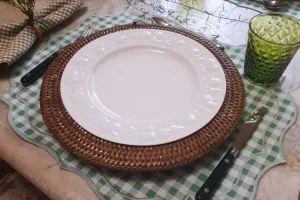
The dinner plate naturally becomes the focal point of each place setting. In this composition, the botanical plate reinforces the fresh green theme while maintaining a refined appearance.
Botanical motifs are widely used in table styling because they evoke nature without overpowering the table. The delicate leaf design complements the gingham pattern while keeping the look light and balanced.
Porcelain plates like this offer several advantages:
• they add refinement to casual table settings
• botanical motifs connect visually with greenery and plants
• neutral tones make them easy to combine with many textiles
• their clean shape keeps the table looking elegant
By layering the porcelain plate over the rattan charger and gingham placemat, the table achieves a harmonious balance between elegance and simplicity.
This combination allows each element to stand out without competing visually.
Completing the Place Setting
Once the main layers are in place, the remaining elements complete the table and bring personality to the composition.
Flatware, glassware, and napkins provide the finishing touches that transform a simple arrangement into a fully styled place setting.
Several small details contribute to the final look:
• stainless steel flatware with dark handles for contrast
• textured green glassware that enhances the color palette
• gingham napkins tied with a natural decorative element
• small sprigs of greenery scattered across the table
Each piece contributes a subtle detail that enriches the overall composition.
The final place setting feels balanced, natural, and thoughtfully arranged without appearing overly formal.
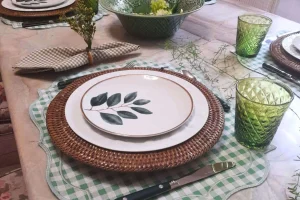
Using Green Glassware to Reinforce the Palette
Glassware often plays a larger role in table styling than many people realize. In this table, textured green glasses help reinforce the color palette established by the gingham placemats and botanical plates.
Colored glassware adds depth and visual interest while remaining functional. The texture of the glass also catches light beautifully, creating subtle reflections that enhance the table.
Green glassware works particularly well in natural table designs because it:
• complements botanical motifs
• adds color without overwhelming the table
• reflects light and creates dimension
• pairs well with both rustic and elegant materials
Because glassware sits slightly above the other table elements, it helps create visual layers that make the table feel more dynamic.
The green glasses therefore act as an elegant accent that ties the entire color scheme together.
A Natural Centerpiece with Ceramic Serveware
The centerpiece of this table is intentionally simple: a green ceramic salad bowl filled with fresh ingredients.
Instead of elaborate floral arrangements, using functional serveware as part of the decoration creates a more relaxed and practical atmosphere. The bowl’s textured surface and soft green color complement the rest of the table while remaining understated.
Ceramic serveware works well as a centerpiece because it:
• adds visual interest without taking too much space
• connects with the table’s color palette
• remains practical during the meal
• keeps the table looking relaxed and inviting
By choosing a ceramic bowl with botanical relief details, the centerpiece also echoes the natural theme established by the plates and greenery.
This approach keeps the table both beautiful and functional.
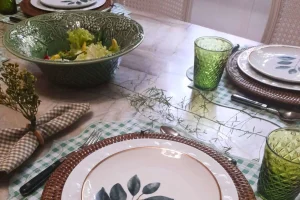
salad bowl
Small Decorative Details That Elevate the Table
While the larger elements establish the structure of the table, small decorative details are what truly bring personality to the setting.
In this table, subtle touches help create a more relaxed and organic atmosphere.
Examples of small details that enhance the composition include:
• a gingham napkin folded casually beside the plate
• a natural napkin ring with a small floral accent
• delicate greenery placed across the marble table
• layered textures combining porcelain, rattan, and fabric
These details add movement and softness to the table without overwhelming the design.
They also help the table feel personal rather than staged.
How Layering Creates a Balanced Table
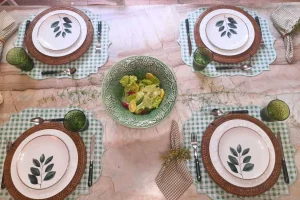
Layering is one of the most effective techniques in table styling. By stacking different materials and textures, the table becomes visually interesting while still maintaining harmony.
In this setting, the layering process follows a simple sequence:
• gingham placemat as the base
• rattan charger adding natural texture
• porcelain plate as the focal point
• flatware and glassware completing the place setting
Each layer serves a purpose and contributes to the overall composition.
This structured approach ensures that the table feels cohesive and well-balanced.
Frequently Asked Questions
Are gingham placemats suitable for everyday dining?
Yes. Gingham placemats are ideal for everyday dining because their pattern is timeless and versatile. They add visual interest to the table while remaining relaxed and easy to combine with different tableware styles.
Can rattan chargers be used with porcelain plates?
Absolutely. Rattan chargers are often paired with porcelain plates because they create a beautiful contrast between natural texture and refined materials.
What colors work best with green table settings?
Green pairs well with many natural tones, including:
• white and cream
• warm browns and woven textures
• soft yellow accents
• botanical patterns and greenery
These combinations help maintain a fresh and balanced table design.
Explore More Table Setting Inspiration
If you enjoy styling relaxed yet elegant tables, you may also like exploring other ideas and seasonal compositions.
You can discover more inspiration in these articles:
• Discover how simple tableware can feel refined in How to Elevate Everyday Stoneware with Silver Flatware and Italian Glassware, where everyday pieces are styled with elegant details.
• Spring Table Setting Ideas for an Elegant Green and Yellow Palette
https://decorhomewith.com/spring-table-setting-ideas-elegant-green-yellow/
• Rustic Italian Table Setting with Red and White Textiles
https://decorhomewith.com/rustic-italian-table-setting-red-white-tablecloth/
• 3 Ways to Style a Gingham Placemat Table Setting for Everyday Dining
https://decorhomewith.com/gingham-placemat-table-setting-ideas/
These tables explore different combinations of colors, textures, and materials that can transform everyday dining into a thoughtful design experience.
Styling for Everyday Dining with an Elevated Feel
One of the most appealing aspects of this table is its ability to feel special without being overly formal. This balance is what defines successful everyday table styling.
Instead of reserving beautiful table settings for special occasions, incorporating small design elements into daily meals can transform routine moments into something more meaningful.
Simple changes can elevate everyday dining:
• using layered placemats instead of a plain table surface
• adding a textured glass or ceramic piece for visual interest
• incorporating small natural elements like greenery or flowers
• maintaining a consistent color palette for harmony
These small adjustments create a sense of intention and care, making
Final Thoughts
A beautiful table does not depend on elaborate decoration. When natural textures, soft colors, and thoughtful details come together, even the simplest arrangement can feel refined and inviting.
This approach shows how a green gingham placemat table setting can transform everyday dining into a moment of comfort, elegance, and effortless style.