
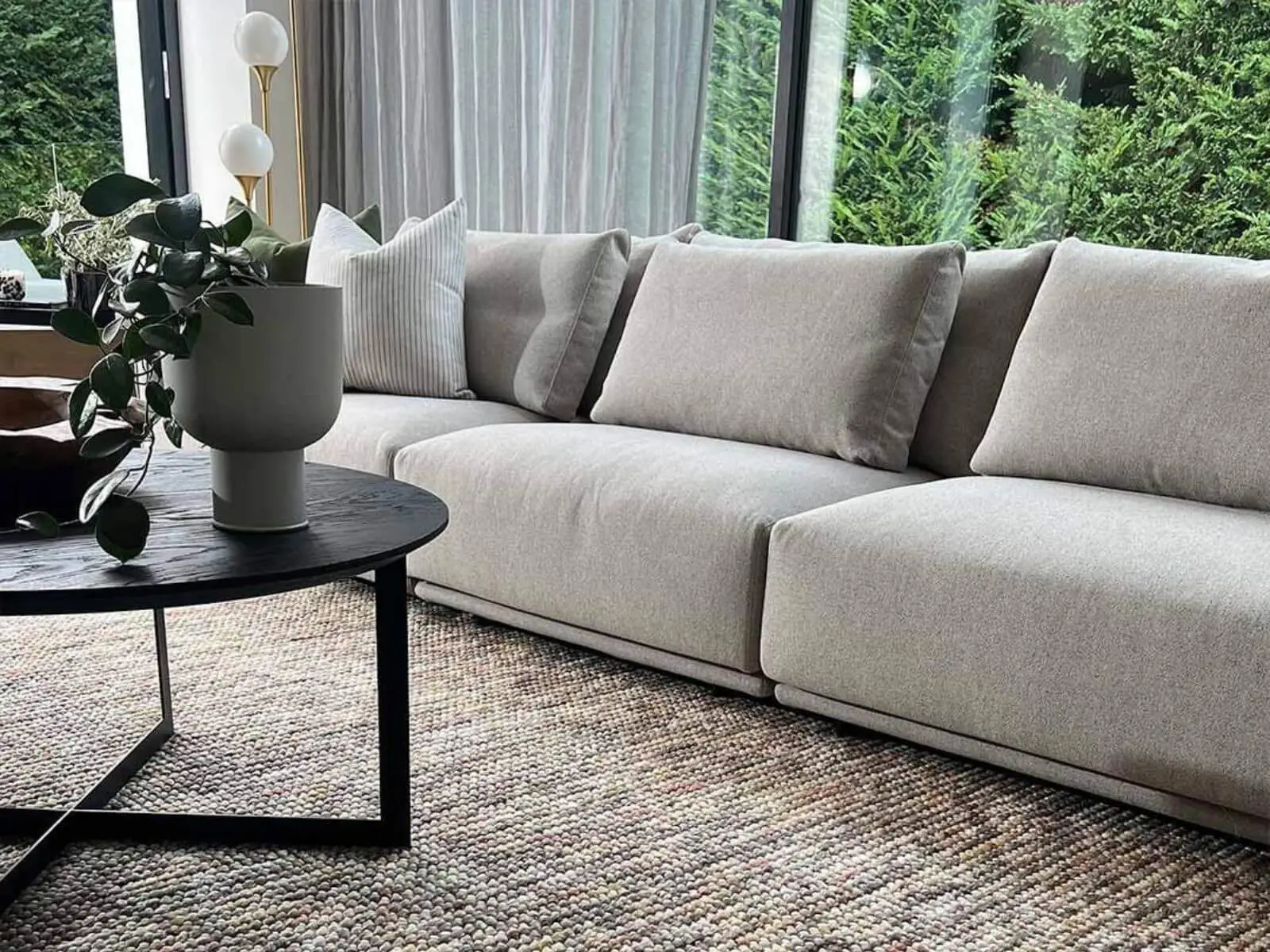
• Textured fabrics create depth without relying on bold colors or excessive decoration.
• The right mix of materials can make a living room feel warmer, more comfortable and more visually balanced.
Modern living rooms are often defined by simplicity. Clean lines, neutral palettes and uncluttered layouts remain popular because they create a sense of calm. Yet simplicity can sometimes leave a room feeling unfinished if every surface looks and feels the same.
This is where texture becomes essential.
A textured fabrics living room does not depend on dramatic colors or expensive statement pieces. Instead, it creates interest through materials, layers and subtle variation. Linen, bouclé, velvet, wool and woven textiles all contribute to a richer visual experience while preserving the clean aesthetic that modern interiors are known for.
The impact goes beyond appearance. Texture changes how a room feels emotionally. It influences comfort, warmth and even how welcoming a space appears to guests. In many cases, the difference between a room that feels styled and a room that feels lived in comes down to texture.
Why Texture Has Become a Defining Feature of Modern Interiors
For years, modern design focused heavily on minimalism.
White walls, sleek furniture and simple forms dominated interior magazines and social media feeds. While these spaces looked beautiful in photographs, many homeowners discovered that living in them felt different from looking at them.
Rooms filled with smooth surfaces often lacked warmth.
Texture emerged as the solution.
Instead of adding more decorations, designers began introducing visual depth through materials. A woven rug could soften polished flooring. A linen sofa could bring character to a neutral room. Textured throw pillows could add variation without introducing visual clutter.
This shift explains why textured fabrics have become one of the most influential elements in contemporary interiors.
They provide complexity without sacrificing simplicity.
[IMAGE PLACEHOLDER]
Alt text: Modern living room featuring layered textured fabrics, linen upholstery and warm neutral colors.
Texture Versus Pattern: Understanding the Difference
Many people assume texture and pattern serve the same purpose.
They do not.
Pattern creates interest through repetition, shapes or graphics. Texture creates interest through surface variation.
Imagine a beige sofa.
If the fabric is perfectly smooth, it may appear flat. If the same sofa is upholstered in woven linen, the visible fibers introduce depth and movement even though the color remains unchanged.
This distinction matters because texture tends to age more gracefully than pattern.
Patterns often reflect specific design trends.
Texture feels timeless because it is rooted in material quality rather than decoration.
For homeowners seeking longevity, texture usually offers more flexibility than heavily patterned textiles.
How Texture Changes the Perception of Space
One of the most overlooked aspects of texture is its influence on spatial perception.
A room with varied textures appears more layered and dimensional.
This effect becomes especially important in open-plan homes where neutral colors dominate.
Texture helps define zones without physical barriers.
For example:
- A wool rug can visually anchor a seating area.
- Linen curtains can soften architectural edges.
- Textured upholstery can make a large room feel more intimate.
- Woven baskets can add warmth to storage solutions.
These subtle differences create visual rhythm throughout the room.
The result feels intentional rather than empty.
Linen: The Foundation of Organic Modern Design
Few fabrics have influenced contemporary interiors more than linen.
Its popularity continues to grow because it strikes a balance between sophistication and comfort.
Linen offers:
- Visible natural texture
- Breathability
- Timeless appeal
- Versatility across design styles
Unlike perfectly smooth synthetic fabrics, linen embraces imperfections.
The subtle irregularities found in its weave create movement and authenticity.
This quality makes linen particularly effective in organic modern interiors where natural materials play a central role.
When Linen Works Best
Choose linen when:
- You want a relaxed atmosphere.
- Natural materials are already present.
- Neutral color palettes dominate the room.
- You prefer understated elegance.
Linen pairs exceptionally well with wood, stone and woven accessories.
Bouclé: Why Designers Continue to Love It
Few fabrics have experienced a rise as dramatic as bouclé.
Characterized by its looped texture, bouclé adds instant depth and softness.
Its popularity reflects a broader trend toward tactile interiors.
People increasingly want homes that feel comfortable rather than merely impressive.
Bouclé contributes to that goal because it introduces visual softness even when used in sculptural furniture.
Best Ways to Use Bouclé
Bouclé works particularly well in:
- Accent chairs
- Benches
- Occasional seating
- Decorative pillows
Using bouclé selectively often creates a stronger impact than covering an entire room with it.
Moderation allows the texture to stand out.
Velvet: Adding Contrast and Richness
While linen and bouclé emphasize softness, velvet introduces a different type of texture.
Its appeal comes from the way it interacts with light.
Throughout the day, velvet appears to shift in tone and depth depending on viewing angle and illumination.
This dynamic quality creates subtle drama.
Velvet works particularly well when a room feels visually flat.
A velvet chair, ottoman or cushion can introduce richness without overwhelming the overall design.
When to Choose Velvet
Velvet may be ideal if:
- The room lacks visual contrast.
- You want a more refined atmosphere.
- Layered lighting is present.
- The space feels overly casual.
The key is balance. Velvet performs best when paired with more relaxed materials such as linen or cotton.
[IMAGE PLACEHOLDER]
Alt text: Contemporary living room combining linen, bouclé and velvet textures in neutral colors.
Cotton and Performance Fabrics for Everyday Living
Not every household prioritizes aesthetics above practicality.
Families, pet owners and high-traffic homes often require more durable solutions.
Cotton blends and performance fabrics have evolved significantly in recent years.
Today’s options offer:
- Enhanced stain resistance
- Improved durability
- Comfortable texture
- Easier maintenance
This combination allows homeowners to enjoy the benefits of texture without constant upkeep.
In many cases, performance fabrics represent the best compromise between beauty and functionality.
Why Neutral Living Rooms Depend on Texture
Neutral interiors remain popular for a reason.
They create a calm backdrop that adapts easily to changing tastes.
However, neutral colors alone are rarely enough.
Without texture, beige, cream, taupe and gray can appear monotonous.
Texture prevents this problem.
Consider a living room featuring:
- A linen sofa
- A wool rug
- Woven baskets
- Textured curtains
- Natural wood furniture
Even within a limited color palette, the room feels layered and dynamic.
Texture becomes the primary source of visual interest.
This is one of the reasons neutral living rooms continue to dominate modern interior design.
Layering Textiles Without Making a Room Feel Busy
One of the biggest misconceptions about texture is that more is always better.
In reality, the most successful textured fabrics living room designs rely on balance rather than quantity. A room filled with competing materials can quickly feel overwhelming, even when the color palette remains neutral.
A practical approach is to think in layers.
Start with one dominant texture. This is usually the sofa, the area rug or the curtains. From there, introduce supporting textures that complement rather than compete with the foundation.
For example, a linen sofa might be paired with a wool throw, a woven basket and a boucle accent chair. Each material contributes something different, yet the overall composition remains cohesive.
The goal is to create variation that feels intentional.
When every surface introduces a different visual language, the room loses harmony. When textures support one another, the room gains depth without sacrificing calmness.
Choosing Textures for Different Lifestyles
Not every living room serves the same purpose.
A space used by a single professional will have different requirements than one shared by children, pets and frequent guests.
This is why fabric selection should begin with lifestyle rather than trends.
For busy households, durability often matters more than appearance alone. Performance fabrics, cotton blends and tightly woven materials typically provide the best balance between maintenance and comfort.
For quieter homes focused on aesthetics and relaxation, linen and bouclé can become stronger focal points.
The most successful interiors are not those that follow trends perfectly. They are the ones that support the way people actually live.
A beautiful room becomes even more valuable when it remains practical year after year.
How Texture Influences Seasonal Decorating
One of the advantages of textured interiors is their adaptability.
Instead of completely redesigning a room every season, small textile changes can refresh the atmosphere with minimal effort.
During colder months, heavier fabrics often create a greater sense of warmth.
Examples include:
- Wool throws
- Chunky knit blankets
- Velvet cushions
- Heavier woven textiles
In warmer seasons, lighter materials help maintain a fresh appearance.
Examples include:
- Linen pillow covers
- Lightweight cotton throws
- Natural woven accents
- Relaxed textured fabrics
This flexibility allows homeowners to update a room without changing furniture or investing in major decorative purchases.
Common Texture Mistakes That Limit a Room’s Potential
Even well-designed spaces can suffer from texture-related mistakes.
The most common issue is relying on only one material throughout the room.
When the sofa, cushions, curtains and rug all share similar textures, the room lacks contrast.
Another mistake is introducing too many strong textures simultaneously.
A heavily textured rug, bold bouclé seating, oversized woven accessories and chunky knit blankets can compete for attention rather than complement one another.
Maintenance should also be considered.
Some fabrics may look beautiful in photographs but become difficult to manage in everyday life.
Good design balances aesthetics with practicality.
The best textures are not necessarily the most dramatic. They are the ones that continue to work long after the excitement of a new trend has faded.
Timeless Textures Versus Trend-Driven Choices
Some materials remain relevant regardless of changing design movements.
Others experience rapid popularity before gradually fading.
Linen has remained desirable for decades because it feels natural, versatile and adaptable.
Wool continues to perform well because it combines durability with comfort.
Natural woven materials consistently appear in interiors because they connect spaces to organic elements.
By contrast, some trend-driven textures become heavily associated with specific periods.
This does not mean they should be avoided.
Instead, it means they should be used thoughtfully.
A timeless foundation combined with selective trend accents often creates the best long-term results.
This strategy allows a room to evolve naturally without requiring complete redesigns every few years.
How to Create a Balanced Textured Living Room
If you are starting from scratch, focus on three principles.
First, vary the scale of textures.
Combine smooth, medium and highly textured surfaces.
Second, stay consistent with the overall mood.
Soft and relaxed textures generally work better together than a mixture of conflicting styles.
Third, prioritize comfort.
A living room is not simply a visual composition. It is a place where people spend time, relax, entertain guests and build routines.
When texture supports comfort, the room becomes more than attractive.
It becomes enjoyable to live in.
Choosing the Right Texture for Your Living Room
Every living room has a different rhythm.
The best way to choose textured fabrics is not by trends, but by how the space is actually used.
If your living room is highly active with family, pets or frequent movement, prioritize durable and low-maintenance materials. Performance fabrics, cotton blends and tightly woven textiles offer the best balance between texture and practicality.
If your space is more focused on relaxation and visual harmony, natural materials like linen and wool create a softer and more atmospheric environment.
For rooms that feel visually flat, adding contrast through bouclé or velvet can immediately elevate the composition.
The key is not to use every texture available, but to select a small group that supports the emotional tone of the room.
Starting Point: A Simple Way to Build a Textured Living Room
If you are starting today, begin with a linen sofa, a wool rug and one accent chair.
This combination creates an immediate sense of balance because it mixes three essential layers of texture without overwhelming the space.
The linen sofa brings softness and natural variation.
The wool rug adds structure and warmth to anchor the room.
The accent chair introduces contrast and visual focus.
From this foundation, everything else becomes easier to build. Additional elements like cushions, throws and baskets should support this base rather than compete with it.
A well-designed living room rarely starts with decoration. It starts with a few intentional material choices that define the entire atmosphere of the space.
Linen vs Bouclé vs Velvet: A Simple Decision Guide
Linen works best when you want natural softness and timeless simplicity.
Bouclé works best when you want visible texture and a more sculptural aesthetic.
Velvet works best when you need contrast, depth and subtle luxury.
In many modern living rooms, the most effective approach is combining all three in different proportions rather than choosing just one.
Common Advanced Mistakes with Textured Fabrics
One of the most overlooked mistakes is treating texture as decoration instead of structure.
When texture is added without intention, the room can feel visually noisy rather than cohesive.
Another common issue is ignoring lighting.
The same fabric can look completely different depending on natural or artificial light. Velvet, in particular, changes dramatically throughout the day.
Finally, many people over-layer textures without considering scale. A mix of too many heavy materials can make a space feel smaller rather than richer.
Editorial Curated Content (Refined Placement)
This article is part of the Decor With editorial curation process. Our goal is to evaluate interior design choices not as isolated trends, but as part of real everyday living. We focus on materials, comfort and long-term usability rather than short-term visual impact.
Final Design Perspective
A textured fabrics living room is not about adding more elements.
It is about refining what is already there.
When texture is used correctly, it replaces excess decoration and brings clarity to the space. The result is a living room that feels balanced, comfortable and visually complete without effort.
Key Takeaways
- Texture creates depth without visual clutter.
- Linen, bouclé and velvet serve different design purposes.
- Lifestyle should guide fabric selection more than trends.
- Lighting changes how texture is perceived.
- Balance matters more than quantity.
A Real-World View of a Well-Balanced Textured Living Room
If you walk into a well-designed textured fabrics living room, nothing feels forced.
You do not notice individual materials first. Instead, you feel the atmosphere.
The room feels warm without being heavy. It feels structured without being rigid. It feels designed without being overworked.
This balance is what separates a visually styled room from a truly livable one.
Texture is not something you add at the end of the process. It is part of the foundation of how a room is built.
When used with intention, it quietly guides everything else: color, lighting, furniture scale and even how people move through the space.
Editorial Closing Note
The goal of Decor With is not to overwhelm spaces with ideas, but to refine how they are lived in.
A well-textured living room is not about perfection. It is about coherence, comfort and quiet visual interest that supports everyday life without demanding attention.
Design becomes successful when it stops competing with living and starts supporting it.
Quick Visual Summary
- Texture replaces the need for excessive decoration
- Natural fabrics create timeless foundations
- Contrast should be intentional, not random
- Lighting changes how materials behave
- The best rooms feel balanced, not decorated
-
🔗 You may also like to read…
Explore more ideas that connect natural materials, balance and modern interior design in real homes:
- Living Room Ideas That Feel Comfortable and Functional
A practical guide to creating a living room that balances comfort, layout and everyday usability. - Modern Home Decor Trends
A deeper look at how current interior trends influence timeless and functional home design. - How to Create a Calm Home Environment
Ideas to bring a more peaceful and balanced atmosphere into your home using simple design choices.
- Living Room Ideas That Feel Comfortable and Functional