

Modern interiors are gradually moving away from rigid, perfectly straight compositions. Instead, many homeowners are discovering that softer silhouettes create spaces that feel calmer, more welcoming, and easier to live in.
- Organic shapes soften visual weight and make rooms feel more relaxed.
- Curved furniture improves movement while creating a balanced atmosphere.
Rather than following a passing trend, organic shapes interior design reflects a broader shift toward homes that prioritize comfort, flexibility, and everyday wellbeing. When curves are introduced thoughtfully, they transform not only how a room looks but also how it feels to use every day.
What Is Organic Shapes Interior Design?
Organic shapes interior design uses forms inspired by nature instead of relying exclusively on straight lines and sharp angles.
Rather than perfect squares or rectangles, furniture and decorative objects feature flowing curves, rounded corners, irregular outlines, and gentle transitions. These shapes resemble stones shaped by water, leaves, clouds, or the natural contours found in landscapes.
The result is an interior that feels softer without becoming overly decorative.
This design approach works because our eyes naturally recognize these forms from the environments we encounter every day. Instead of feeling rigid or formal, rooms appear balanced and approachable.
Organic shapes can be introduced in many ways, including coffee tables, mirrors, rugs, sofas, lighting, artwork, ceramics, and architectural details. Even a few carefully chosen pieces can change the overall atmosphere of a room.
Why Our Eyes Naturally Prefer Organic Shapes
Our brains process curved forms differently from sharp geometric lines.
Curves suggest movement instead of interruption. They create smoother visual transitions, allowing the eye to travel comfortably throughout a space without constantly stopping at abrupt corners.
This subtle effect makes interiors feel calmer.
In everyday living, that sense of calm matters. A room that feels visually relaxed often becomes a place where people naturally spend more time reading, talking, or simply unwinding after a busy day.
While straight lines remain essential for structure, adding organic forms prevents the room from feeling overly rigid or mechanical.
Instead of competing with the architecture, curved pieces soften it.
Organic Shapes Interior Design in Everyday Living Rooms
The living room shown here illustrates this concept particularly well.
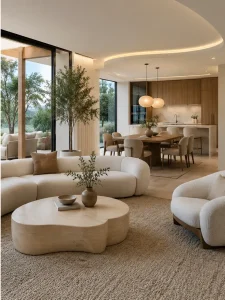
The overlapping coffee tables immediately become the visual anchor of the space. Although each table has an irregular outline, together they create balance rather than disorder.
Around them, the remaining furniture follows a restrained language.
The sofa features clean lines softened by generous cushions.
The armchairs introduce rounded backs.
Artwork brings natural imagery to the walls without overwhelming the room.
The overall impression is one of quiet harmony.
Nothing feels forced, yet every element contributes to a space that encourages relaxation.
This demonstrates an important lesson in organic shapes interior design: curves work best when they complement the room instead of dominating it.
How Organic Shapes Improve Everyday Circulation
One of the least discussed advantages of organic furniture is how it affects movement.
Traditional rectangular coffee tables often create hard corners that interrupt circulation, especially in compact living rooms.
Rounded tables naturally reduce these obstacles.
Walking around them feels easier because there are no sharp edges projecting into circulation paths.
Families with children often appreciate this practical benefit, but it also improves daily comfort for adults.
Guests can move more freely between seating areas.
Cleaning becomes easier because there are fewer tight corners to reach.
The room simply functions better.
This is an example of how good design quietly improves everyday living without drawing attention to itself.
Organic Shapes Support More Flexible Furniture Layouts
One advantage that is often overlooked is flexibility.
Organic furniture adapts easily as a room evolves over time. Unlike large rectangular pieces that often dictate a fixed arrangement, rounded tables and softly shaped accent pieces can be repositioned without disrupting the overall balance of the room.
This flexibility becomes especially valuable in homes where spaces serve multiple purposes. A living room may also function as a reading area, a place for entertaining, or a workspace during part of the day.
Furniture with softer outlines allows these transitions to happen naturally.
Instead of feeling restricted by rigid geometry, the room remains adaptable to changing routines while maintaining a cohesive appearance.
Where Organic Shapes Work Best
Organic forms adapt surprisingly well to different rooms throughout the home.
In living rooms, curved coffee tables and rounded accent chairs soften seating arrangements while improving circulation.
Dining rooms benefit from oval tables that encourage conversation and make it easier for guests to move around the space.
Bedrooms often feel more restful when rounded nightstands, upholstered headboards, or softly curved lighting replace rigid geometric pieces.
Entryways gain warmth through organic mirrors or sculptural consoles that create a welcoming first impression.
Even home offices can become less visually demanding by incorporating curved desk lamps, rounded shelving accessories, or organically shaped rugs.
Rather than limiting organic shapes to one specific room, the key is choosing pieces that support the way each space is used every day.
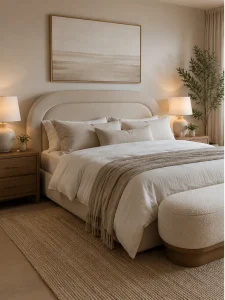
Organic-shapes-bedroom-with-a-curved-upholstered-bed-natural-wood-furniture-and-layered-neutral-bedding
Choosing Organic Shapes That Match Your Lifestyle
One of the reasons organic shapes have become so popular is their ability to adapt to different ways of living.
A family with young children may appreciate a rounded coffee table because it creates safer circulation around the seating area. Someone living alone in a compact apartment might choose a curved accent chair to soften the sharp lines created by cabinetry and walls.
The right choice depends less on following trends and more on understanding how the room is used every day.
Before investing in curved furniture, consider how people move through the space, where conversations naturally happen, and which areas need to remain visually open.
Organic shapes work best when they support these daily routines instead of competing with them.
Organic Shapes Interior Design in Open-Concept Homes
Open-plan layouts often combine the living room, dining room, and kitchen into one continuous environment.
Without careful planning, these spaces can begin to feel overly linear, especially when cabinetry, islands, shelving, and flooring all follow strong horizontal and vertical lines.
This is where organic shapes interior design becomes especially valuable.
A rounded coffee table, a softly curved sofa, or a sculptural side table helps introduce visual pauses between architectural elements.
Rather than breaking the flow, these pieces guide the eye naturally from one zone to another.
The result is a home that feels connected while still offering subtle distinctions between living areas.
For many homeowners, this approach improves both comfort and visual organization without requiring structural changes.
Decision Guide
If your room already contains many straight architectural lines, organic furniture can create balance.
If your space already features numerous curved elements, adding too many more may reduce visual definition.
The goal is harmony rather than repetition.
Mixing Organic Shapes With Natural Materials
Curves become even more inviting when paired with materials inspired by nature.
Wood with visible grain.
Natural stone with flowing veining.
Linen upholstery.
Bouclé fabrics.
Handmade ceramics.
Together, these materials reinforce the softness created by rounded forms.
Instead of feeling manufactured, the room develops a quiet sense of authenticity.
Many contemporary interiors combine these elements because they age gracefully.
Unlike highly decorative finishes that may fall out of fashion, natural materials develop character over time.
Small marks, subtle color changes, and everyday wear often enhance their appearance instead of diminishing it.
This long-term durability makes them an excellent companion for organic design.

Why Organic Design Ages Gracefully
Some decorating trends feel exciting at first but quickly begin to look dated.
Organic design follows a different path because its inspiration comes from nature rather than fashion.
Curved forms, wood grain, stone surfaces, and handmade ceramics have remained relevant across decades and design styles. They work equally well in contemporary homes, transitional interiors, and even spaces with traditional architecture.
Choosing these elements often means making fewer changes in the future.
Instead of redecorating every few years, homeowners can refresh a room with textiles, artwork, or seasonal accessories while keeping the main furniture pieces for many years.
This long-term perspective supports both sustainability and better investment decisions.
Common Mistake and How to Avoid It
A common misconception is that every piece of furniture should have curved edges.
In reality, successful interiors depend on contrast.
If every table, chair, mirror, lamp, and accessory follows the same rounded language, the room may begin to lose visual structure.
Instead, think of organic shapes as complementary elements.
A rectangular rug can support a curved coffee table.
Straight shelving can highlight a rounded sofa.
Linear wall art can balance sculptural furniture.
Contrast allows each element to stand out while creating a composition that feels intentional rather than repetitive.
Whenever introducing a new curved piece, step back and evaluate how it relates to the existing architecture instead of replacing everything at once.
Living With Organic Shapes Every Day
One of the greatest strengths of organic design is that it becomes almost invisible during daily life.
After the initial visual impression fades, what remains is comfort.
Walking around rounded furniture feels easier.
The room appears less crowded.
Children have fewer sharp corners to navigate.
Guests naturally gather around curved seating arrangements because conversations feel more inclusive.
These subtle improvements rarely attract immediate attention.
Instead, they quietly influence how people experience the home every day.
That lasting comfort explains why organic forms continue to remain relevant even as decorating trends evolve.
Practical Checklist Before Buying Organic Furniture
Before choosing pieces with curved silhouettes, ask yourself a few practical questions.
✔ Does this shape improve movement through the room?
✔ Will it balance the existing straight architectural lines?
✔ Does it suit the size of the space?
✔ Is the material durable enough for everyday use?
✔ Will the design still feel timeless in five years?
✔ Does it create comfort without making the room feel crowded?
Answering these questions helps transform an attractive purchase into a thoughtful long-term investment.
Continue Exploring Contemporary Interior Design
Discover more articles about materials, furniture and design principles that create timeless, comfortable interiors.
- Interior Design Trends from Milan Design Week
- Curved Furniture in Modern Living Rooms
- Natural Wood Furniture in Contemporary Interiors
- Textured Fabrics in Modern Living Rooms
How to Introduce Organic Shapes Without Renovating
Many homeowners assume that embracing organic design requires replacing an entire room.
In reality, small changes often have the greatest impact.
A curved coffee table.
A round mirror.
A ceramic lamp with a sculptural silhouette.
Even a textured vase or an irregular decorative bowl can soften a space dominated by straight lines.
Starting with one or two carefully selected pieces allows homeowners to observe how the room changes before making larger investments.
This gradual approach reduces unnecessary spending and helps each new element feel intentional rather than trend driven.

Conclusion
Organic shapes interior design demonstrates that softness is not simply a visual preference but a practical design strategy for everyday living.
Rounded furniture, flowing silhouettes, natural materials, and balanced layouts create spaces that feel calmer, easier to navigate, and more welcoming over time. Rather than chasing temporary trends, choosing organic forms allows homeowners to build interiors that remain comfortable, functional, and visually appealing for years.
When curves are introduced thoughtfully and balanced with straight architectural lines, they become more than decorative details. They help transform a house into a home that feels relaxed, timeless, and naturally connected to the people who live there.
Take Away
Organic shapes are not about replacing every straight line in a room.
They are about creating balance.
By introducing carefully chosen curves through furniture, tables, lighting, or accessories, homeowners can improve circulation, soften visual contrast, and create interiors that feel more comfortable every day.
The most successful spaces combine organic forms with practical decision-making, ensuring that beauty and functionality evolve together over time.
Frequently Asked Questions
What is organic shapes interior design?
Organic shapes interior design uses furniture, décor, and architectural details inspired by natural forms rather than rigid geometric lines. The goal is to create spaces that feel softer, more comfortable, and visually balanced.
Where do organic shapes work best?
They work particularly well in living rooms, open-plan spaces, bedrooms, reading corners, and dining areas where softer circulation and a welcoming atmosphere improve everyday comfort.
Can organic furniture work in small rooms?
Yes. Carefully selected curved furniture can actually make compact spaces feel more open by improving circulation and reducing the visual heaviness created by sharp corners.
Are organic shapes just another design trend?
While their popularity has grown in recent years, organic forms have appeared throughout design history. Their connection to nature gives them a timeless quality that often outlasts short-lived decorating trends.
You May Also Like Reading…
- Modern Living Room Design Principles
- Curved Furniture Guide
- Interior Design Trends That Last