
Introduction
Living room lighting ideas can completely transform the way a small space feels without changing its size. Thoughtful lighting improves comfort, highlights architectural features, and makes everyday activities more enjoyable while helping compact living rooms appear larger and more balanced.
- Layered lighting creates flexibility for different activities throughout the day.
- Well-positioned light sources improve comfort while making small rooms feel more spacious.
Many homeowners focus first on furniture or color when decorating a living room.
In reality, lighting influences every element that comes afterward.
It changes how colors are perceived.
It highlights textures.
It defines focal points.
Most importantly, it affects how comfortable the room feels every time someone walks into it.
A carefully planned lighting scheme allows even the smallest living room to feel warm, functional, and welcoming.
What Makes Good Living Room Lighting?
Lighting is much more than brightness.
Good lighting creates atmosphere while supporting the way people actually use the room.
A living room may function as a place for reading.
Watching movies.
Working occasionally.
Entertaining guests.
Relaxing with family.
No single light source performs all these functions equally well.
The most successful living room lighting ideas combine different types of lighting that work together throughout the day.
Rather than relying only on a ceiling fixture, they layer light to create flexibility and visual comfort.
Why Layered Lighting Works Best
Professional interior designers rarely depend on one central light fixture.
Instead, they combine multiple light sources with different purposes.
Ambient lighting provides overall illumination.
Task lighting supports reading and focused activities.
Accent lighting highlights artwork, shelving, plants, or architectural features.
When these layers work together, the room feels richer without requiring brighter bulbs.
Layered lighting also allows the atmosphere to change naturally.
Bright illumination works well during the day or while cleaning.
Softer evening lighting creates a calmer environment for conversation or relaxation.
Instead of changing the room itself, lighting changes how the room is experienced.
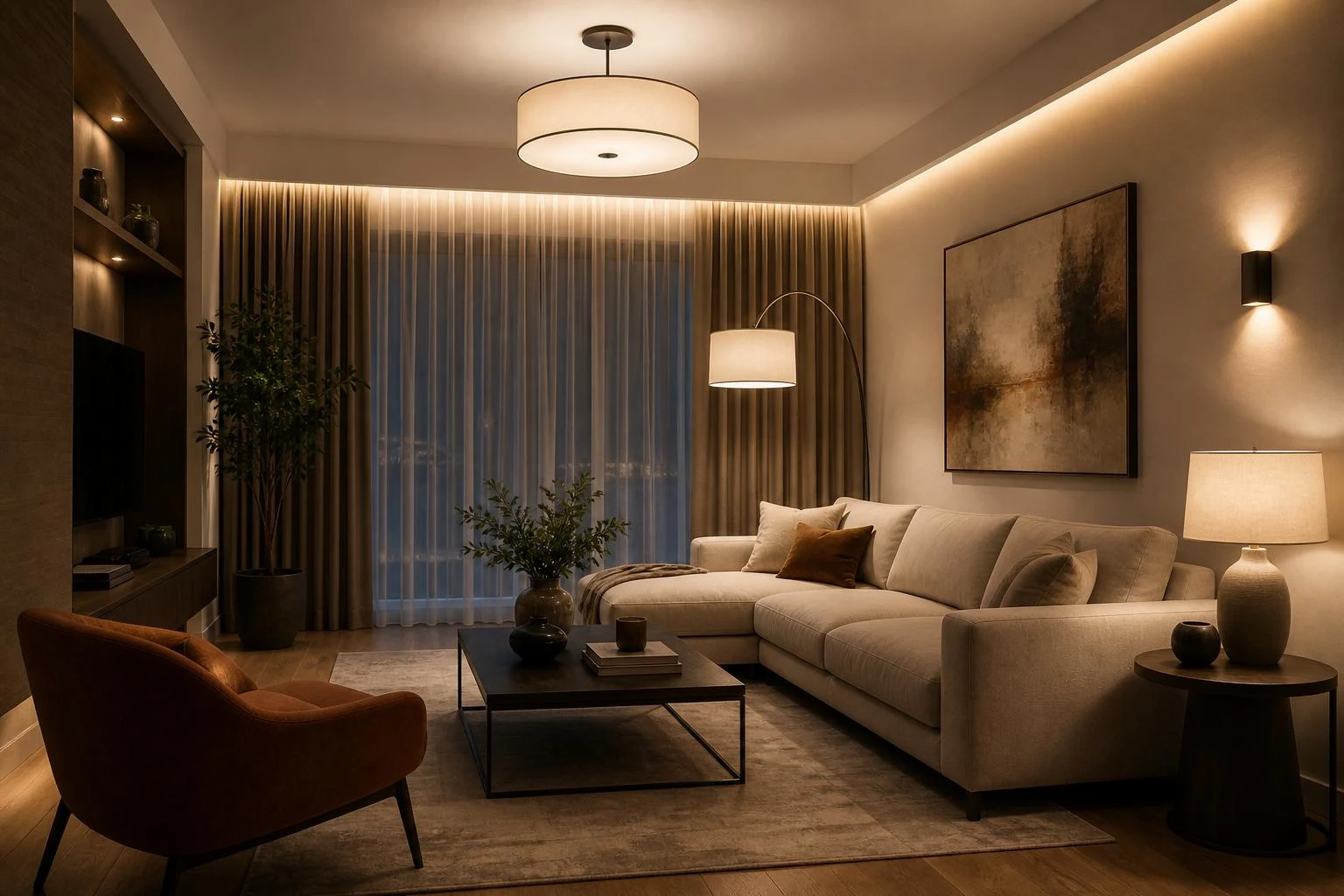
[IMAGE — Small living room using ceiling light, floor lamp, and table lamp together]
Using Floor Lamps Without Taking Over the Room
Floor lamps are often the easiest way to improve lighting in a compact living room.
They require no electrical renovation.
They introduce vertical interest.
They help define seating areas.
Slim contemporary designs occupy surprisingly little floor space while providing generous illumination.
Placing a floor lamp beside the sofa naturally creates a comfortable reading corner.
Positioning one near an accent chair balances the overall composition of the room.
Rather than treating floor lamps as decorative accessories, think of them as functional furniture that also contributes to the atmosphere.
Table Lamps Create Warmth at Eye Level
Ceiling lights alone often produce flat illumination.
Table lamps solve this problem by bringing light closer to eye level.
This creates softer shadows and a more welcoming atmosphere.
A lamp placed on a side table beside the sofa encourages conversation.
Another positioned on a console adds depth to the room.
Instead of flooding the entire space with bright overhead lighting, several smaller sources create a layered environment that feels far more comfortable.
This approach works especially well in apartments and compact homes where creating visual warmth is important.
Maximizing Natural Light Before Adding More Fixtures
One of the best living room lighting ideas doesn’t involve buying another lamp.
It begins by making the most of the daylight already available.
Avoid placing tall furniture directly in front of windows whenever possible.
Choose curtains that filter light instead of blocking it completely.
Use mirrors strategically to reflect daylight deeper into the room.
Keep window areas free from unnecessary decorative objects that interrupt the flow of light.
These simple adjustments often make a compact living room feel significantly brighter without increasing electricity use.
Natural light also reveals colors and textures more accurately, helping every material in the room feel richer and more inviting.
Choosing the Right Color Temperature
Brightness is only part of good lighting.
Color temperature has an equally important influence on comfort.
Warm white lighting creates an inviting atmosphere that works beautifully in living rooms.
Cool white light often feels better suited to kitchens or workspaces because it produces a sharper appearance.
For spaces designed for conversation, reading, or relaxation, warm lighting generally provides the most comfortable environment.
It complements natural wood.
Enhances neutral fabrics.
Softens wall colors.
Creates a welcoming atmosphere during the evening.
Maintaining the same color temperature across different fixtures also helps the room feel visually consistent.
[IMAGE — Warm evening lighting creating a cozy contemporary living room]
Highlighting Architectural Features
Lighting becomes much more interesting when it emphasizes the room itself.
Instead of illuminating every surface equally, use light to guide attention toward attractive architectural details.
A floor lamp can accentuate a textured wall.
Wall sconces can frame artwork or built-in shelving.
Picture lights highlight a gallery wall.
Indirect lighting can emphasize ceiling details or decorative niches.
These small focal points introduce depth without increasing visual clutter.
In compact living rooms, highlighting one or two carefully selected features often creates a stronger impression than simply adding brighter ceiling lights.
Using Wall Lighting to Save Floor Space
Small living rooms benefit from solutions that improve functionality without occupying valuable floor area.
Wall sconces are excellent examples.
Mounted beside artwork.
Near shelving.
Next to a sofa.
Or above reading chairs.
They provide targeted illumination while leaving tables and floors completely free.
Swing-arm sconces add even greater flexibility because they can be adjusted according to different activities.
This combination of practicality and elegance makes wall-mounted lighting particularly useful in apartments and compact homes.
How Lighting Supports Different Daily Activities
Most living rooms serve multiple purposes throughout the day.
Morning coffee requires bright natural light.
Reading benefits from focused task lighting.
Watching television often feels more comfortable with dim ambient lighting rather than complete darkness.
Entertaining guests usually calls for a warm combination of ceiling lights, table lamps, and accent lighting.
Instead of expecting one fixture to satisfy every situation, create several lighting layers that can be used independently.
This flexibility allows the room to adapt naturally as daily routines change.
Good lighting supports people rather than forcing people to adapt to the lighting.
[IMAGE — Small living room showing multiple lighting layers for different evening activities]
Decision Guide: Which Lighting Solution Does Your Living Room Need?
Before purchasing another light fixture, identify what the room is actually missing.
Choose a floor lamp if one corner feels dark.
Choose table lamps to create warmth around seating areas.
Choose wall sconces if floor space is limited.
Choose dimmable ceiling lighting for greater flexibility.
Choose accent lighting if you want to highlight artwork, shelving, or architectural details.
Choose mirrors if increasing natural daylight is the primary objective.
The best lighting plan combines several modest improvements instead of relying on one oversized fixture.
Each layer contributes to comfort while making the room feel more balanced and enjoyable every day.
Common Mistake and How to Avoid It
One of the most common lighting mistakes is relying on a single ceiling fixture to illuminate the entire living room.
While this approach provides enough brightness to move around safely, it rarely creates a comfortable atmosphere.
A single overhead light often produces harsh shadows, flat surfaces, and little visual depth.
Instead, divide the lighting into layers.
Allow the ceiling fixture to provide general illumination.
Use table lamps for warmth.
Introduce a floor lamp beside the sofa for reading.
Add accent lighting to highlight artwork, shelving, or architectural details.
When every light has a specific purpose, the room immediately feels more inviting without becoming brighter.
The objective is comfort, not intensity.
Living With the Space
Thoughtful lighting continues improving everyday life long after the furniture has been arranged.
Morning routines feel more pleasant as natural daylight fills the room.
Evening conversations become more relaxed under warm ambient lighting.
Reading no longer requires uncomfortable brightness throughout the entire space.
Watching television feels easier because surrounding lamps reduce eye strain without creating distracting reflections.
These small improvements accumulate over time.
Instead of constantly adjusting blinds or wishing for more light, the room naturally adapts to different moments of the day.
That flexibility is one of the greatest advantages of a well-planned lighting scheme.
How Lighting Evolves With Your Living Room
Lighting should never feel fixed.
As your living room changes, your lighting can evolve with it.
A reading chair added beside the window may benefit from a slim floor lamp.
New shelving may deserve discreet accent lighting.
Seasonal decorating can influence the warmth of the room simply by changing lampshades or introducing softer bulbs.
Because lighting is flexible, it allows the room to grow without requiring major renovations.
Small updates often produce noticeable improvements.
A new table lamp.
A dimmer switch.
An additional wall sconce.
Each decision adds another layer of comfort while preserving the overall design.
Rather than replacing the entire lighting scheme, homeowners can gradually refine it as their needs evolve.
This makes lighting one of the most adaptable investments in interior design.
[IMAGE — Evening living room showing layered lighting with floor lamp, table lamp, and indirect illumination]
Lighting and Texture Work Together
Lighting becomes significantly more effective when it interacts with texture.
Smooth painted walls reflect light evenly.
Natural wood introduces warmth.
Linen shades soften brightness.
Woven baskets create subtle shadow patterns.
Stone surfaces reveal depth as light moves across them.
Instead of thinking about lighting and decorating as separate decisions, consider how one enhances the other.
Warm lighting emphasizes the grain of wood furniture.
It softens woven fabrics.
It highlights handcrafted ceramics.
It brings depth to textured rugs.
This relationship explains why layered interiors often feel richer even when the color palette remains neutral.
Texture gives lighting something beautiful to reveal.
Creating Atmosphere Instead of Simply Adding Brightness
Many homeowners believe that a brighter room is automatically a better room.
In reality, atmosphere matters more than brightness.
Comfortable living rooms usually combine areas of light and shadow.
A reading lamp creates a cozy corner.
A console lamp adds depth near the wall.
Indirect ceiling lighting softly illuminates the entire room.
Together these layers create visual rhythm.
The eye naturally moves from one illuminated area to another.
The room feels calmer because every space does not compete equally for attention.
This approach transforms lighting from a practical necessity into one of the room’s strongest design elements.
Checklist
Before considering your lighting plan complete, ask yourself:
✔ Do you have more than one light source?
✔ Can the room adapt to different activities?
✔ Does the lighting highlight textures and architectural details?
✔ Are dark corners comfortably illuminated?
✔ Have you balanced natural and artificial light?
✔ Do all fixtures share a similar warm color temperature?
✔ Will the lighting continue working as the room evolves?
If most answers are yes, your lighting is likely supporting both comfort and everyday functionality.
You May Also Enjoy Reading
If you’re creating a living room that feels brighter, warmer, and more comfortable, these related guides continue the same design approach.
Small Living Room Ideas That Maximize Space
Discover Small Living Room Ideas That Maximize Space to learn practical layout strategies that improve circulation, functionality, and everyday comfort in compact homes.
Living Room Wall Decor That Feels Intentional
Read Living Room Wall Decor That Feels Intentional to see how artwork, texture, and architectural details work together with lighting to create balanced interiors.
How to Use Texture in a Living Room
Explore How to Use Texture in a Living Room to discover how natural materials and layered finishes allow lighting to create greater warmth and visual depth.
Conclusion
Living room lighting ideas are about much more than choosing attractive fixtures. Good lighting supports everyday routines, highlights the room’s best features, improves comfort, and makes even compact spaces feel larger and more welcoming. By combining natural daylight with layered artificial lighting, every part of the room becomes more enjoyable to use.
Rather than relying on a single overhead fixture, build a flexible lighting plan that evolves with your home. Thoughtfully placed lamps, warm color temperatures, and well-balanced lighting layers create living rooms that remain comfortable, functional, and timeless for years to come.
Take Away
The best lighting plans combine functionality with atmosphere. Layered lighting, warm illumination, and carefully positioned fixtures make small living rooms feel brighter, more spacious, and significantly more comfortable without requiring major renovations.
Frequently Asked Questions
What are the best living room lighting ideas for small spaces?
Layered lighting using ceiling fixtures, floor lamps, table lamps, and wall sconces creates flexibility while making compact rooms feel larger.
How many light sources should a living room have?
Most living rooms benefit from at least three lighting layers: ambient, task, and accent lighting.
Should living room lighting be warm or cool?
Warm white lighting generally creates a more comfortable and inviting atmosphere for everyday living.
Can lighting make a small living room look bigger?
Yes. Properly layered lighting, combined with natural daylight and strategically placed fixtures, helps create the impression of a larger space.
What is the biggest lighting mistake in a living room?
Relying entirely on one ceiling light. Multiple light sources provide greater comfort, better functionality, and a more balanced atmosphere.