
Introduction
A bedroom often serves more than one purpose. It is where rest happens, where the day slows down, and where small moments of quiet are usually attempted between routines that rarely stop completely.
Without a defined space, reading often happens in improvised positions, with pillows adjusted repeatedly, posture changing every few minutes, and attention breaking more easily than expected.
Creating a cozy reading corner in the bedroom is not about adding more furniture. It is about shaping a small area that already feels resolved before you sit down, so comfort and focus happen more naturally.
Why This Matters in Real Life
A reading corner is one of those subtle additions that rarely transforms a room immediately, yet gradually changes how the bedroom is used because it introduces a place where sitting down already feels intentional.
It creates a quiet boundary between rest and activity, even when both need to exist inside the same room without competing visually.
In practice, this often means reading starts with less hesitation, because the body no longer has to negotiate where comfort begins.
Over time, the bedroom begins to feel more complete, not simply because another function was added, but because the room starts responding better to slower habits that usually disappear when space feels undefined.
The result is a room that works better day after day, with less visual effort and more practical clarity.
A well-designed cozy reading corner in the bedroom makes slowing down feel easier, often without requiring any deliberate change in routine.
Choosing the Right Spot for Your Reading Corner
Using natural light to your advantage
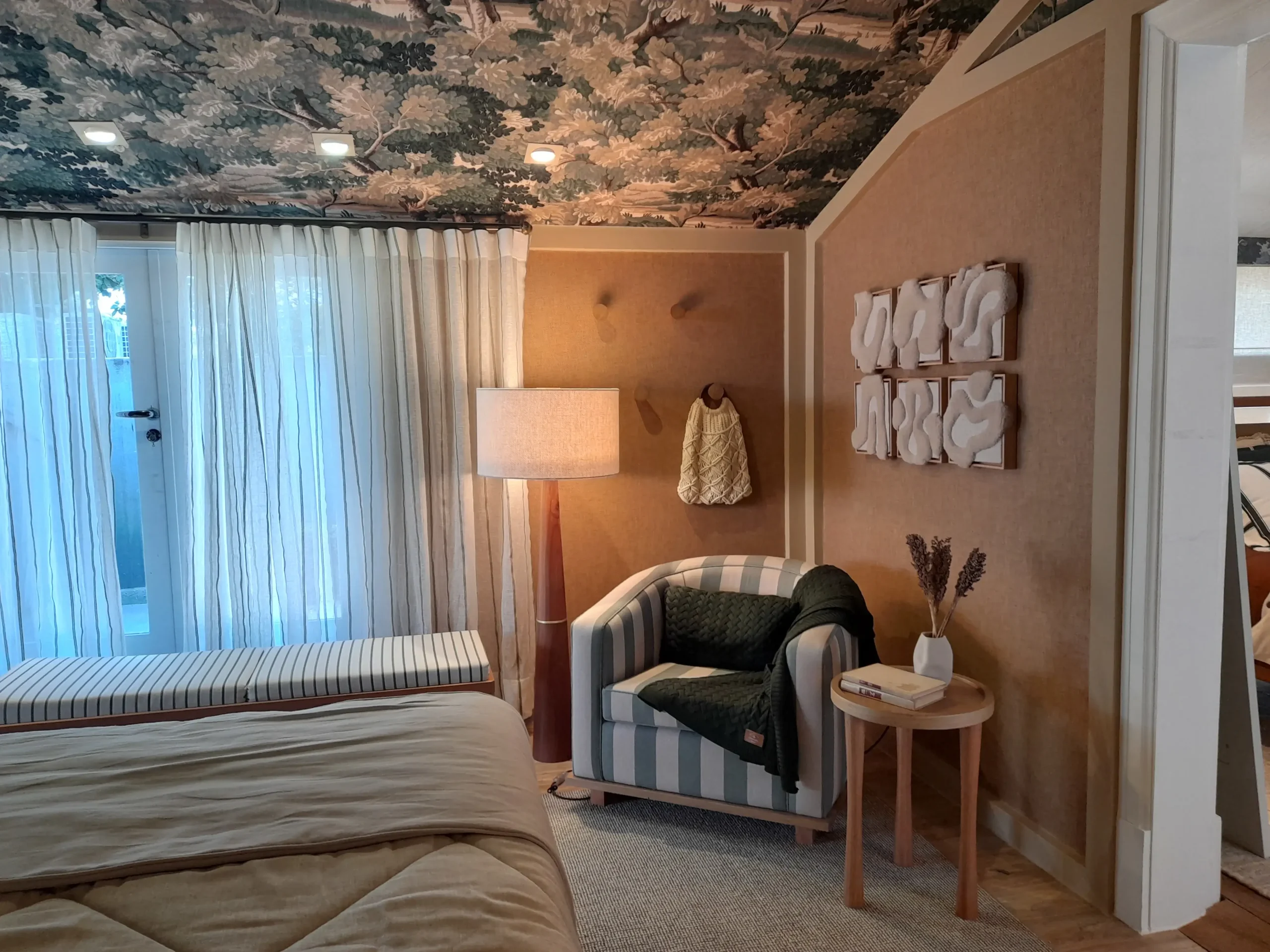
Positioning your reading corner near a window often creates a difference that feels small at first but becomes more noticeable over time, especially because natural light makes the area easier to approach during quieter parts of the day.
Natural brightness softens visual contrast, reduces strain during longer reading moments, and helps the corner feel calm without requiring any additional effort from the room itself.
cozy-reading-corner-in-bedroom-with-upholstered-armchair-and-warm-textured-fabrics

Adapting to small or shared bedrooms
Not every bedroom offers extra space, yet a reading corner rarely depends on having more square footage than expected.
A corner near the bed, the area beside a nightstand, or even a narrow section along one wall can be enough when the layout already allows movement to remain comfortable.
In narrower bedrooms, angling the chair slightly instead of placing it parallel to the wall often preserves circulation more naturally and avoids making the corner feel inserted rather than integrated.
This is where small-space thinking becomes essential, because working with what already exists usually produces a result that feels more believable than forcing a new layout into the room.
What happens over time
When a reading spot is well positioned, it gradually becomes part of your routine in a way that rarely feels deliberate.
You stop thinking about creating the moment and simply sit down, which is often the point where the space begins to matter more than its visual appearance.
That shift is subtle, yet it is what allows the habit to settle without depending on motivation each time.
Over time, the bedroom begins to support more than rest because slower moments already have a place waiting for them.
Beyond light and positioning
Placement is only part of the experience. What matters just as much is how the space continues to feel across different hours of the day.
A corner that feels inviting in the morning but disconnected after sunset often becomes occasional rather than consistent.
Instead of focusing only on where the chair sits, it helps to observe how the corner behaves within everyday movement:
• movement within the room
• proximity to frequently used areas
• the overall sense of quiet or interruption
In smaller bedrooms, especially in apartment layouts, these details often determine whether the corner remains naturally present or slowly disappears into the background of daily use.
The goal is not simply to place a reading corner, but to allow it to settle into the rhythm of the room so naturally that its presence begins to feel expected.
Seating That Supports Comfort Without Taking Over
Choosing a chair that invites you to sit
A reading corner works best when the seating feels natural and easy to approach.
The right chair does not need to stand out visually. It should simply feel as though it already belongs there, inviting you to sit down without hesitation.
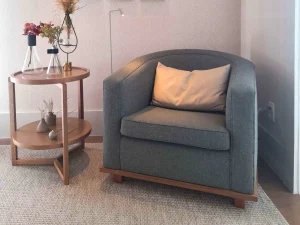
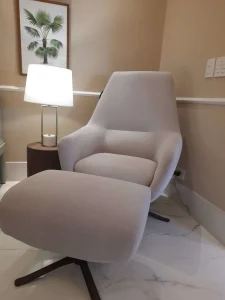
The armchair shown here works particularly well because it has a soft structure, feels visually grounded, and offers enough support for longer reading moments without visually dominating the room.
Adjusting for space limitations
In smaller bedrooms, scale often matters more than style because proportion is what preserves comfort in the room over time.
Oversized chairs can quickly disturb visual balance, making the bedroom feel tighter even when floor area technically remains available.
More compact pieces usually integrate with less resistance and allow the corner to feel intentional rather than imposed.
An upholstered chair, a dining-style seat with a soft cushion, or even a simple bench can create comfort without interrupting circulation.
In apartment-scale interiors, these quieter solutions often remain more convincing than larger statement pieces because they respond better to how the room is actually used.
Comfort over time
Comfort is not only about softness, but about how naturally the body settles once sitting becomes habitual.
A chair with gentle support usually encourages longer reading moments, while something too deep or overly soft often creates small adjustments that interrupt focus more than expected.
Height also matters more than it first appears. When a chair sits too low or requires effort to get in and out of, frequent use tends to decline quietly over time.
What usually works best feels balanced:
• feet resting naturally on the floor
• back supported without constant repositioning
• a stable base that allows small movements
These details may seem minor, yet they often determine whether the corner remains part of daily life.
When seating feels right, sitting down stops being a decision and begins to happen almost automatically.
Lighting That Makes the Space Usable at Any Time
This becomes even more important in compact living situations, where each element often needs to support more than one function without creating visual excess.
Layering light sources
Lighting often determines whether a reading corner continues to be used consistently, because even comfortable seating loses value when the space only works during one part of the day.
A well-functioning reading corner rarely depends on a single light source. It usually combines quiet layers that allow the atmosphere to shift naturally as daylight changes.
Ambient light defines the overall mood of the room, while a more focused source, such as a table lamp or floor lamp, supports reading without demanding visual adjustment.
Solving low-light situations
When natural light is limited, artificial lighting becomes essential rather than optional.
A well-positioned lamp can completely change how approachable the corner feels after sunset.
What matters most is direction. Light should fall gently across the page rather than from behind or from an angle that creates shadow near the hands.
Small adjustments here often make a larger difference than changing the lamp itself.
Comfort and ease over time
Good lighting reduces effort in ways that are easy to overlook during setup but immediately noticeable during use.
You do not need to adjust your posture repeatedly. Your eyes remain comfortable for longer. The space simply asks less from the body.
That quiet ease is often what allows the reading corner to remain part of daily life rather than becoming occasional.
The role of light temperature
Light temperature has a subtle but powerful influence on how the corner is experienced.
Cooler tones often feel clearer and more functional, yet they can also make the space feel slightly detached from the bedroom.
Warmer light usually creates more visual enclosure, which is why it tends to integrate better with spaces intended for slower evening use.
Even a simple bulb change often alters how naturally the corner is used over time.
Lighting is what allows a cozy reading corner in the bedroom to remain usable throughout the day and still feel inviting after dark.
Surfaces That Keep Everything Within Reach
The role of a small table or nightstand
A reading corner without a nearby surface quickly becomes inconvenient, especially once the space starts being used regularly during quieter evening hours.
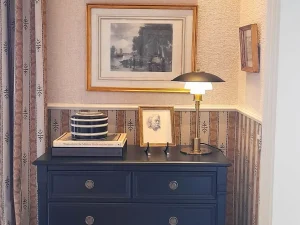
A small table or nightstand may seem secondary at first, yet over time it often becomes what keeps the corner practical, particularly when reaching for a book, glasses, or a lamp should happen without interrupting comfort.
The most effective arrangements are usually the simplest: a stable surface, room for a few essentials, and lighting that feels naturally integrated rather than added afterward.
Budget-friendly solutions
You do not need to introduce a new piece of furniture to make this work.
In many bedrooms, the most convincing solution is already present and simply waiting to be reassigned.
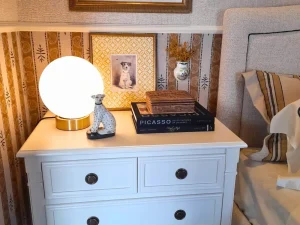
A nightstand can shift position, a small stool can assume a second role, or even a short stack of books can temporarily support what the corner needs.
These quieter adjustments often feel more believable, especially in smaller bedrooms where every object benefits from having more than one purpose.
Long-term usability
When each object has a defined place, the corner becomes easier to use and noticeably easier to maintain over time.
There is less interruption, less visual accumulation, and fewer small decisions each time the space is used.
That quiet reduction in friction is often what keeps the corner functioning naturally beyond the first weeks.
The importance of proportion
Height is one of those details that usually goes unnoticed until comfort begins to feel slightly off.
If the surface sits too low, reaching down repeatedly interrupts the reading rhythm more than expected.
If it sits too high, both usability and visual proportion begin to feel less resolved.
Ideally, the surface should remain close to the arm height of the chair so movement feels immediate rather than deliberate.
It is a minor adjustment, yet one that often improves comfort in a way that remains almost invisible, which is usually the strongest sign that the space is working well.
Textiles That Create Warmth Without Clutter
Adding softness through layers
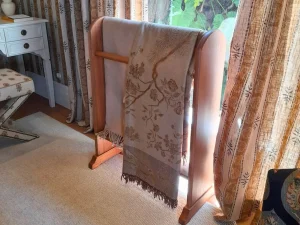
Textiles are often what quietly shift a reading corner from functional to inviting, because softness is usually perceived first through contact rather than through decoration alone.
A single fabric layer, such as a throw blanket, often changes more than expected by making the seating feel immediately more approachable without adding visual excess.
What matters is not quantity, but how the material settles into the surrounding composition and responds to the overall tone of the room.
Balancing comfort and simplicity
It is easy to assume that additional layers automatically create more comfort, yet too many visible elements often make the corner feel visually busy before it feels welcoming.
In most bedrooms, one throw and, if needed, a single cushion are usually enough to create warmth while preserving clarity.
This quieter approach tends to work especially well in smaller rooms, where visual calm directly influences how comfortable the corner feels.
Daily practicality
The success of a reading corner often depends less on appearance and more on how naturally the space can be used without preparation.
If several items need adjustment before sitting down, even small interruptions begin to weaken the habit over time.
When textiles remain simple and stay in place easily, they support comfort without becoming another element that asks for attention.
Choosing the right materials
Material choice has a direct effect on how the corner feels across different seasons and different moments of the day.
Heavier fabrics create a stronger sense of enclosure, which often works well in colder months or evening reading.
Lighter textiles keep the area visually breathable and tend to integrate more naturally when the bedroom already feels bright or open.
If the room leans toward warmer tones, natural fabrics such as cotton or linen usually add texture without making the corner feel dense.
These smaller decisions often define space-efficient decor, where each element contributes quietly to both comfort and visual clarity.
A Common Mistake — and What Actually Works
When a reading corner becomes only decorative
One of the most common mistakes is treating the reading corner as a visual gesture before it becomes a usable part of the room.
This usually happens when styling decisions arrive too early, before comfort, light, and accessibility have been quietly resolved.
A reading corner should feel effortless rather than staged, because spaces that look complete but ask for adjustment tend to lose relevance in daily life.
What usually works better is starting with function:
• comfortable seating
• proper lighting
• an accessible surface
Only after these elements feel naturally balanced should visual layers begin to appear.
Living With the Space
A well-designed reading corner rarely reveals its value immediately. It becomes more convincing through repetition, as the room begins to support moments that happen without planning.
In the morning, the corner often feels lighter and quieter. Natural light enters softly, making it easier to sit down before the day fully accelerates.
In the afternoon, it often becomes a reset point, sometimes for only a few pages, sometimes simply as a brief pause away from visual noise.
By evening, the atmosphere changes again. Warmer light creates a stronger sense of enclosure, allowing the corner to feel gently separated from the rest of the bedroom.
How it adapts naturally
Over time, the corner usually becomes less about reading itself and more about having a place that already supports slower moments when they appear.
Maintenance remains minimal because the objects around it already belong there and rarely need rearrangement.
During weekends, the same space often expands in meaning: longer reading sessions, slower mornings, or simply sitting without any defined purpose.
Seasonality also changes how the corner is perceived.
On colder days, a throw naturally adds warmth and visual softness.
In warmer months, the same corner feels lighter, especially when positioned near airflow or softer daylight.
What changes — and what doesn’t
As months pass, the corner begins to reflect routine in subtle ways.
Books shift position naturally. A blanket moves with the season. Lighting adjusts almost without notice as days become shorter or longer.
These changes do not suggest disorder. They usually indicate that the space has become active enough to absorb daily life without losing clarity.
A well-designed reading corner is never completely static.
It adapts quietly, often without requiring deliberate redesign, because the strongest spaces usually evolve through use rather than correction.
That quiet adaptability is what separates a decorative arrangement from one that continues to matter.
The more naturally the space aligns with routine, the less attention it asks for and the more value it quietly accumulates over time.
For this type of layout, an upholstered armchair with moderate depth usually remains one of the easiest choices because it offers comfort without visually dominating the room.
A small table lamp with warm light also tends to support consistency, especially when evening use matters as much as daytime comfort.
If space is limited, a compact side table or even a simple stool is often enough to keep essential objects within reach without interrupting circulation.
Integrating the Reading Corner Into Your Bedroom Layout
Avoiding layout disruption
A reading corner should never interrupt the natural flow of the room.
It should feel like it has always been part of the space — positioned in a way that supports movement rather than blocking it.
In apartment-scale interiors, this becomes even more important. Every element needs to justify its presence, and placement plays a central role in that balance.
Creating zones without walls
Even within a single room, it’s possible to create subtle zones.
A reading corner doesn’t require physical separation. Instead, it works through perception.
It becomes a quiet shift within the space — a place that signals a different rhythm, without needing to define it explicitly.
Over time, it functions as a mental separation, a behavioral cue, and a visual anchor, all without adding anything structural.
Long-term flexibility
Needs change, and the space should adapt with them.
A well-integrated reading corner rarely serves just one purpose. It shifts naturally — from reading to journaling, from quiet pauses to moments of rest.
This flexibility is what allows the space to remain relevant over time.
Small Adjustments That Make a Big Difference
Angle and positioning
Small adjustments often have a greater impact than larger changes.
A slight angle in the chair, a lamp placed closer to the page, or a subtle shift in table height can immediately improve how the space functions.
These changes are almost invisible, but their effect is felt instantly.
Reducing friction in daily use
A well-designed corner removes small obstacles.
There’s no need to move objects, adjust lighting repeatedly, or compensate for discomfort. The space works as it is.
This ease is what aligns the reading corner with real daily use, especially in compact interiors.
Creating Visual Calm Without Losing Personality
Keeping the space visually quiet
A reading corner usually feels more inviting when visual information remains controlled enough for the eye to settle naturally.
This does not mean removing personality, but reducing elements that compete unnecessarily for attention.
In practice, this often includes:
• limiting color variations
• avoiding overly busy patterns
• keeping surfaces partially empty
This becomes especially important in small home design, where visual accumulation quickly translates into mental fatigue.
A balanced setup does not remove character. It simply arranges it in a way that allows calm to remain visible.
Using repetition to create harmony
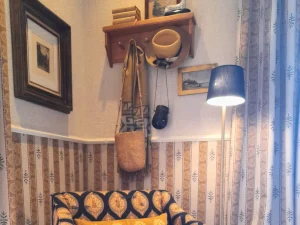
Repeating materials and tones helps the corner feel naturally connected to the rest of the bedroom rather than visually separated from it.
For example:
• matching wood tones
• coordinating fabrics
• keeping a consistent palette
This creates quiet order without making the room feel rigid or overly designed.
What this changes over time
A visually calm space is usually easier to return to because it does not create small interruptions before the moment even begins.
You do not feel the need to adjust anything before sitting down.
That quiet readiness is often what makes the corner sustainable in daily life.
Even a small reading corner or a quiet bedroom reading space can gradually influence how the entire room feels and functions.
Integrating the Reading Corner Into Your Bedroom Layout
Avoiding layout disruption
A reading corner should never interrupt the natural flow of the bedroom, because once circulation feels compromised, the space immediately begins to feel less convincing.
It works best when its presence feels expected, as though it had always belonged there rather than being inserted afterward.
In apartment-scale interiors, this becomes even more important because every element needs to justify its place quietly, and placement often determines whether the room still feels breathable.
Creating zones without walls
Even within a single bedroom, subtle zones can emerge without any physical separation.
A reading corner usually works through perception rather than division.
It becomes a quiet shift inside the room, a place that signals another rhythm without ever needing to announce it.
Over time, this often functions as a mental separation, a behavioral cue, and a visual anchor at the same time, without adding anything structural.
Long-term flexibility
Needs change, and the space should remain open enough to change with them.
A well-integrated reading corner rarely serves only one purpose. It often moves naturally from reading to journaling, from quiet pauses to moments of rest without requiring any adjustment.
That flexibility is often what allows the corner to remain relevant long after the initial setup.
Small Adjustments That Make a Big Difference
Angle and positioning
Small adjustments often create a greater effect than larger interventions because they influence comfort without altering the room visually.
A slight angle in the chair, a lamp positioned closer to the page, or a subtle correction in table height can immediately change how natural the corner feels.
These decisions are almost invisible, yet their effect is usually felt within the first use.
Reducing friction in daily use
A well-resolved corner removes small obstacles before they become habits of avoidance.
There is no need to move objects, correct lighting repeatedly, or compensate for discomfort after sitting down.
The space simply functions as it is, which is often what makes it survive daily use in compact interiors.
That quiet absence of friction is usually what turns a designed corner into a place that continues to be chosen.
You May Also Like
If you are exploring ways to make the bedroom feel more comfortable and functional, these articles expand naturally on layout, lighting, and everyday usability:
• Small Bedroom Ideas That Actually Work explores how limited space can support comfort without compromising movement.
• Bedroom Lighting Ideas That Feel Soft and Intentional (#234) explains how light changes atmosphere and usability across different hours of the day.
• Bedroom Layout Ideas That Improve Flow (#238) focuses on positioning choices that make movement feel more natural inside the room.
• Bedroom Organization That Stays Functional (#239) shows how order can remain practical without adding complexity to daily routines.
Taken together, these ideas help shape a bedroom that feels easier to live in, not only visually balanced, but quietly complete in everyday use.
Final Thoughts
A cozy reading corner in the bedroom is rarely defined by size, style, or decoration alone.
What ultimately gives it value is how naturally it enters daily life, often so quietly that the corner begins to feel necessary before it is consciously noticed.
When seating, light, access, and visual calm work together, the space stops feeling like an added feature and begins to function as part of the room itself.
Over time, that is usually what creates the real difference.
Not how the corner appears at first glance, but how consistently it supports small pauses, slower moments, and the kind of quiet that remains usable without effort.
This is where thoughtful cozy reading corner bedroom ideas matter most: not as decoration, but as choices that allow the bedroom to respond better to the way life actually happens.