
Cozy Living Room Ideas: How to Create Warmth Without Too Much Stuff
Cozy living room ideas are often misunderstood.
Many people assume comfort comes from adding more — more pillows, more decor, more furniture. But true coziness is not created by quantity. It is created by intention.
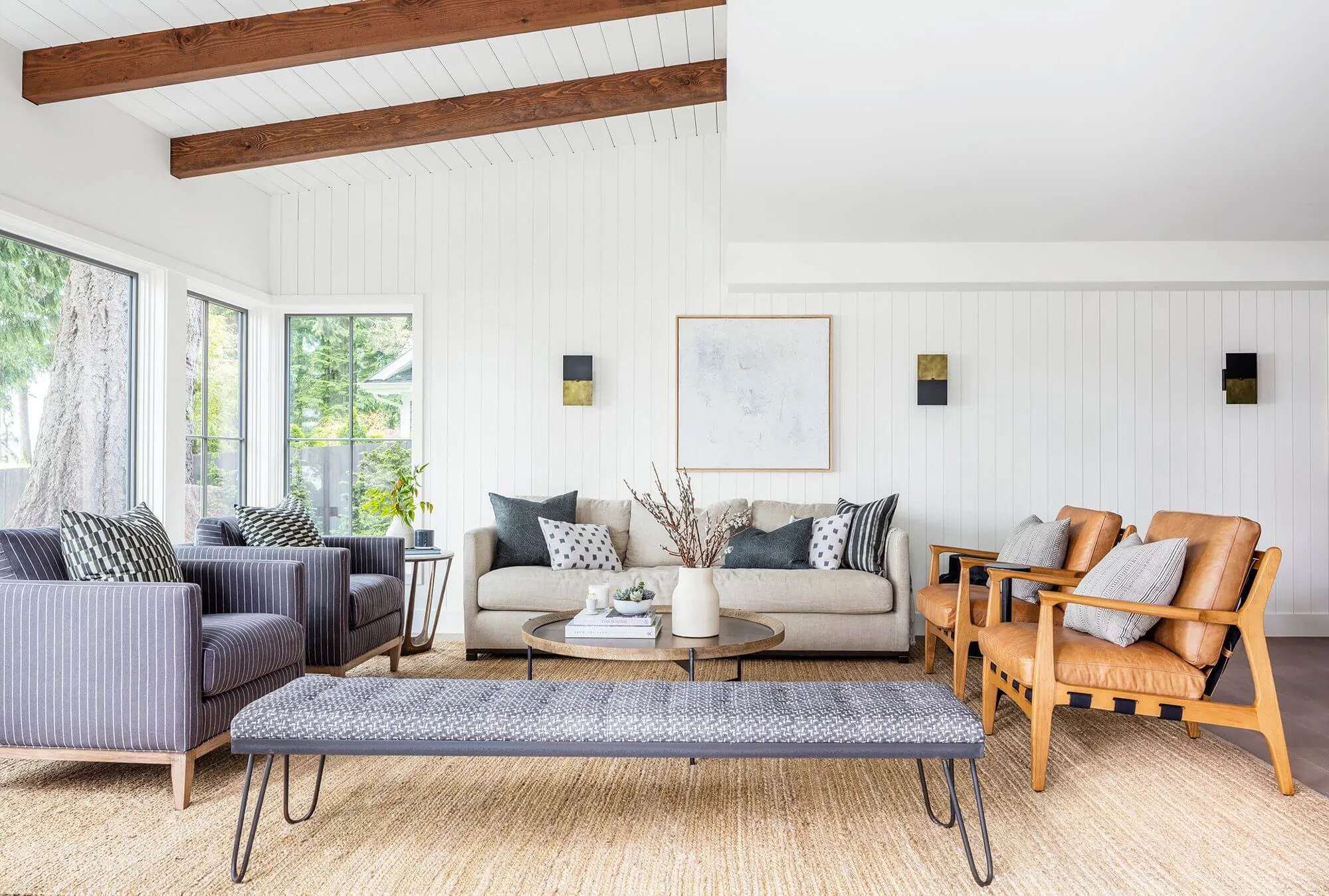
A cozy living room feels warm, layered, and inviting without feeling crowded. It encourages relaxation without overwhelming the senses. The secret lies in texture, lighting, proportion, and thoughtful restraint.
If you want a space that feels comforting but not cluttered, here’s how to create a living room that feels genuinely cozy — without filling it with unnecessary stuff.
Why Cozy Doesn’t Mean Cluttered
One of the biggest misconceptions in interior design is equating coziness with abundance.
While layered textiles and soft materials do contribute to warmth, overcrowding a space can create visual stress. Too many decorative objects compete for attention. Too many furniture pieces disrupt flow.
True cozy living room ideas prioritize:
-
Emotional warmth
-
Visual balance
-
Soft lighting
-
Comfortable seating
-
Breathing room
Clutter creates tension. Space creates calm.
A cozy atmosphere comes from harmony — not accumulation.
Start With a Warm Foundation (Color & Tone)
Color sets the emotional tone of a room before anything else.
To create warmth without heaviness, focus on soft, inviting palettes that reflect light while maintaining depth.
Some of the most effective cozy living room ideas begin with:
-
Warm whites
-
Soft beige
-
Light greige
-
Muted sage
-
Dusty blue
-
Warm taupe
These tones create a gentle backdrop that allows texture and lighting to shine.
Avoid overly bright whites or stark cool grays. They can make a room feel sterile instead of welcoming.
If you prefer deeper shades, use them strategically — on an accent wall, in textiles, or through artwork rather than across every surface.
Color should support comfort, not dominate it.
Layer Texture Instead of Objects
If there is one principle that defines cozy living room ideas, it is this:
Layer materials — not clutter.
Instead of adding more decorative items, introduce variation through tactile elements:
-
Linen or cotton upholstery
-
Chunky knit throws
-
Wool or textured rugs
-
Woven baskets
-
Velvet or bouclé accent chairs
-
Natural wood surfaces
Texture adds depth without visual noise.
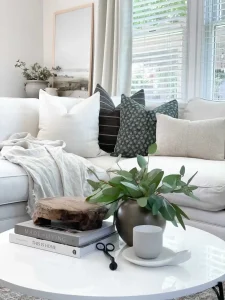
For example, a neutral sofa can feel dramatically cozier when paired with:
-
A soft throw blanket
-
Two textured pillows
-
A warm-toned rug
-
A wooden side table
Notice that nothing excessive was added — only layered thoughtfully.
Texture creates intimacy. Excess creates distraction.
Choose Furniture That Feels Inviting, Not Heavy
Cozy living room ideas are deeply connected to how furniture feels — visually and physically.
Oversized sectionals in small spaces often overwhelm the room. On the other hand, furniture that is too minimal or rigid can feel unwelcoming.
Look for pieces that balance comfort and scale:
-
Sofas with soft edges instead of sharp lines
-
Upholstery in natural fabrics
-
Chairs with visible legs to maintain lightness
-
Rounded coffee tables to soften the layout
Comfort is not about bulk. It is about proportion.
If you’re working with limited square footage, strategic layout decisions matter just as much as softness. For deeper planning strategies, read our guide on apartment living room decor to ensure flow and proportion are working in your favor.
Lighting That Creates Instant Warmth
Lighting may be the most transformative element in cozy living room ideas.
Overhead lighting alone rarely feels warm. It creates flat illumination and harsh shadows.
Instead, layer your lighting:
-
Floor lamps in darker corners
-
Table lamps on side tables
-
Wall sconces for soft ambient glow
-
Warm LED bulbs (2700K–3000K)
Lighting at different heights creates depth and atmosphere.
Candles — real or LED — also introduce flicker and warmth without adding clutter.
A cozy living room is softly illuminated, never brightly exposed.
The Power of Negative Space
It may sound counterintuitive, but empty space is essential to coziness.
Negative space allows the eye to rest. It prevents visual fatigue. It makes each chosen item feel intentional.
Incorporate breathing room by:
-
Leaving some wall space unfilled
-
Avoiding overcrowded shelves
-
Limiting coffee table decor to a few meaningful items
-
Keeping surfaces partially clear
Restraint is what allows warmth to shine.
When everything competes for attention, nothing feels special.
How to Make a Small Living Room Feel Cozy
Small spaces have an advantage: intimacy.
Instead of trying to make a small living room feel larger at all costs, focus on amplifying its natural sense of enclosure.
Some cozy living room ideas for small spaces include:
-
Position seating closer together to encourage conversation
-
Use a properly sized rug to anchor the layout
-
Add floor-to-ceiling curtains to create softness
-
Introduce warm wood tones for grounding
-
Incorporate soft lighting at eye level
Avoid pushing all furniture against walls. Slightly floating pieces can make the room feel more intentional and inviting.
Cozy does not require large square footage — it requires thoughtful scale.
Cozy Living Room Ideas for Apartments
Apartment living rooms often need to balance function with comfort.
To keep coziness without clutter:
-
Choose multi-functional furniture (storage ottomans, nesting tables)
-
Keep color palettes cohesive
-
Avoid excessive small decor items
-
Use vertical space strategically
A cozy apartment living room should feel adaptable. It should support daily routines while maintaining warmth.
Stick to a limited number of materials and repeat them throughout the room. Repetition creates harmony, which enhances comfort.
Incorporate Natural Elements
Nature has an immediate calming effect.
Even a few subtle natural elements can elevate cozy living room ideas:
-
A potted plant
-
A wooden coffee table
-
Woven baskets
-
Linen curtains
-
Stone or ceramic decor
Natural textures bring warmth without visual clutter.
Plants, in particular, soften corners and improve the emotional atmosphere of a room.
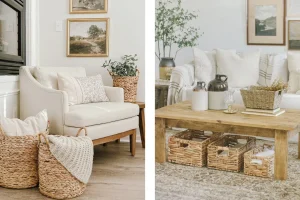
Cozy-living-room-corner-with-linen-throw-woven-basket-and-natural-textures-creating-warmth-without-excess-decor.
Create a Focal Point
A cozy space benefits from a visual anchor.
This could be:
-
A fireplace
-
A statement artwork
-
A media console
-
A gallery wall (kept minimal and cohesive)
When a room lacks a focal point, the eye wanders — which can feel unsettled.
Keep the focal point clear and avoid competing elements nearby.
Coziness thrives on clarity.
Common Mistakes That Kill Coziness
Even well-intentioned decorating can work against comfort.
Here are common mistakes to avoid:
Overdecorating Surfaces
Too many small items create clutter quickly.
Harsh Lighting
Cool bulbs and bright overhead fixtures remove warmth instantly.
Too Many Competing Colors
Limit your palette to create visual calm.
Oversized Furniture in Small Rooms
Heavy pieces reduce both space and intimacy.
Ignoring Texture
Flat, uniform materials can make a room feel cold.
Cozy living room ideas succeed when they prioritize feeling over excess.
The Emotional Side of Cozy Design
At its core, coziness is emotional.
It is the feeling of safety after a long day. The comfort of soft light in the evening. The invitation to sit, relax, and stay awhile.
A cozy living room supports:
-
Conversation
-
Rest
-
Reading
-
Quiet moments
It does not need to impress — it needs to embrace.
When designing, ask yourself:
Does this item add warmth?
Does it serve a purpose?
Does it enhance calm?
If the answer is no, it may not belong.
Cozy Living Room Ideas on a Budget
Warmth does not require luxury spending.
Invest in:
-
Quality lighting
-
A comfortable sofa
-
A well-sized rug
Save on:
-
Trend-driven decor
-
Excess accessories
-
Decorative objects without purpose
Simple swaps — like changing bulb temperature or adding a textured throw — can dramatically shift the atmosphere.
Intentional design always feels more elevated than expensive design.
How Layout Influences Coziness More Than Decor
Many people focus on accessories when searching for cozy living room ideas. But layout often has a greater impact than decor itself.
The way furniture is arranged directly affects how a space feels.
A room where seating is too far apart feels disconnected. A room where pieces block natural pathways feels tense. A layout with no central orientation feels unsettled.
To create intimacy:
-
Position seating within conversational distance
-
Angle chairs slightly inward
-
Anchor furniture around a central element
-
Keep walkways clear but not exaggerated
Coziness thrives in subtle enclosure.
You do not need more furniture — you need furniture that relates to each other.
Even moving a sofa a few inches closer to an accent chair can transform the emotional tone of the room.
When layout supports connection, warmth naturally follows.
Creating Evening Atmosphere: The Secret Layer of Cozy Living Room Ideas
Coziness is most noticeable at night.
During the day, natural light defines the mood. But in the evening, artificial lighting determines whether a space feels inviting or stark.
To enhance nighttime warmth:
-
Use dimmable lamps whenever possible
-
Avoid turning on all lights at once
-
Create pools of light instead of full-room brightness
-
Incorporate soft shadows
A cozy living room should feel like a retreat in the evening — not a showroom.
Warm lighting at lower heights (side tables, floor level) creates depth. Overhead lighting alone flattens it.
Think in layers, not intensity.
How Scent and Sound Contribute to Coziness
Design is not purely visual.
True cozy living room ideas engage multiple senses.
Subtle scent can dramatically shift atmosphere. Consider:
-
Soft vanilla or amber candles
-
Cedarwood diffusers
-
Linen or cotton room sprays
Sound also influences comfort.
-
Soft background music
-
Textiles that absorb echo
-
Rugs that reduce harsh acoustics
A room that sounds softer feels warmer — even if visually minimal.
Coziness is sensory, not decorative.
Balancing Minimalism and Warmth
Many people fear that reducing decor will make their space feel cold.
But a minimalist cozy living room is entirely possible.
The difference lies in softness.
Minimalism becomes warm when it includes:
-
Natural materials
-
Gentle curves
-
Layered fabrics
-
Warm light
Minimalism becomes cold when it relies only on hard surfaces and sharp geometry.
You do not need more items to create comfort.
You need fewer, better-chosen elements.
Intentional simplicity often feels more luxurious than excess.
Transitional Cozy Living Rooms: Designing for Seasonal Flexibility
One of the smartest cozy living room ideas is designing for adaptability.
Instead of permanently styling for one season, build a flexible base.
Keep your foundation neutral:
-
Sofa
-
Rug
-
Curtains
-
Main furniture
Then rotate:
-
Pillow covers
-
Throws
-
Candle scents
-
Small decor accents
This keeps the room feeling fresh without constant purchasing.
Coziness evolves. It does not need to be redesigned every season.
The Role of Personal Meaning in a Cozy Space
A living room feels truly cozy when it reflects identity.
Not through clutter — but through curated meaning.
This could include:
-
One framed photograph
-
A stack of well-loved books
-
A travel memento
-
Handmade ceramics
Personal objects, when edited thoughtfully, add emotional warmth that no store-bought decor can replicate.
Coziness is not aesthetic perfection.
It is emotional connection.
Frequently Asked Questions About Cozy Living Room Ideas
How do I make my living room cozy without clutter?
Focus on texture, warm lighting, and a cohesive color palette. Keep surfaces partially clear and avoid excessive small decor items.
What colors make a living room feel cozy?
Warm neutrals like beige, greige, soft taupe, muted sage, and dusty blue create warmth without heaviness.
Can minimalist spaces feel cozy?
Yes. A minimalist cozy living room uses fewer items but emphasizes soft materials, layered lighting, and natural textures.
How do you cozy up a modern living room?
Introduce warmth through textiles, warm wood tones, softer lighting, and curved shapes to balance clean lines.

Final Thoughts: Warmth Comes From Intention
Cozy living room ideas are not about filling space — they are about shaping atmosphere.
When you focus on:
-
Warm color foundations
-
Layered textures
-
Soft lighting
-
Balanced scale
-
Thoughtful restraint
You create a room that feels inviting without feeling crowded.
Coziness is not measured by how much you add, but by how intentionally you curate.
Warmth lives in softness.
Comfort lives in balance.
And a truly cozy living room is one that allows you to breathe, relax, and feel at home.
🔗 You may also enjoy reading
If you’re exploring cozy interiors, these guides can help you create a living room that feels both comfortable and functional:
• Learn how to organize furniture and improve flow in our guide to small living room decor.
• Discover practical layout strategies in small room layout solutions that maximize space.
• Explore ideas for creating balance and harmony in decorating small spaces without overcrowding them.
• For apartment layouts, read our guide to apartment living room decor with practical choices.