
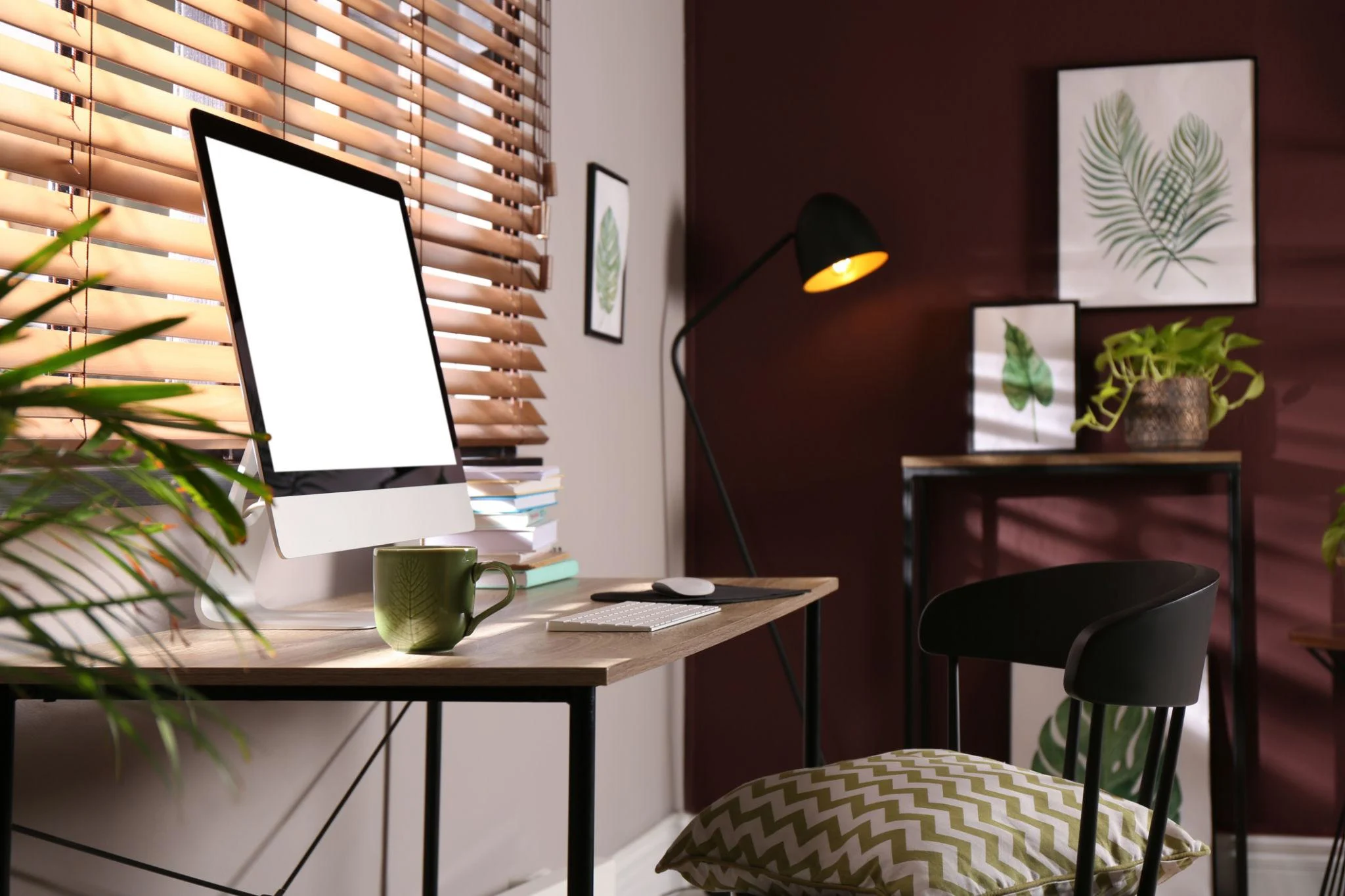
A home office often begins with practical intentions. A desk is placed where space allows, a chair is added, and basic equipment quickly turns one corner of the home into a working area. At first, this may seem sufficient, especially when the goal is simply to create a place to sit and complete tasks.
Over time, however, the daily experience reveals that some spaces support work naturally while others create subtle friction that becomes more noticeable each week. The difference usually has little to do with decoration alone.
What truly matters in a home office is how the room responds to repeated use across long hours, changing tasks, and different levels of concentration.
A workspace does not need to feel large or highly designed to function well. It needs balance between comfort, light, accessibility, and visual control.
Many people focus first on visible furniture choices, but the strongest home office decisions often involve less obvious elements that affect how the room feels during ordinary days.
That is why a practical workspace often performs better than one built only around appearance.
Why Comfort Matters More Than Decoration
A visually attractive office can still become tiring if comfort is neglected.
Comfort begins with how the body remains supported during ordinary work periods, but it also includes how naturally objects are reached, how often posture changes, and whether the room encourages unnecessary tension.
A desk that looks elegant but sits too high quickly becomes uncomfortable.
A chair that fits the room visually but lacks basic support often creates fatigue before the day ends.
For this reason, comfort should guide early decisions even before decorative choices.
A workspace that feels physically easy to use usually remains sustainable for longer periods.
This does not require expensive equipment.
Often, small adjustments improve comfort more than replacing furniture entirely.
The relationship between desk height, arm position, and screen level has greater impact than decorative accessories placed around the room.
Even simple corrections often improve the entire daily experience.
comfortable-home-office-with-ergonomic-chair-and-soft-lighting-supporting-long-and-focused-work-sessions.
Light Influences More Than Visibility
Light affects concentration, visual fatigue, and how long a room remains pleasant during work hours.
Natural light is usually the most beneficial starting point because it changes gradually through the day and reduces visual heaviness.
When possible, a desk positioned near a window often improves the overall atmosphere of work without additional intervention.
The goal is not direct glare but balanced brightness.
A strong light source directly behind a screen may create reflection, while excessive side contrast can produce eye strain.
Artificial light becomes equally important during early mornings, cloudy days, or evening work.
A focused lamp helps define the work zone and prevents the room from feeling visually flat.
Good office lighting does not need complexity.
It needs consistency and enough softness to support long periods of reading or screen use.
This is one reason many productive workspaces feel calm even when simple.
Desk Position Changes Daily Experience
The desk often determines whether the home office feels natural or constantly inconvenient.
Its position affects circulation, visual comfort, and even mental focus.
A desk placed too close to circulation areas may create constant distraction.
A desk facing a wall may help concentration for some people, while others work better with open visual depth nearby.
The correct position depends less on design trends and more on routine.
What matters is whether movement around the desk feels easy.
The user should not need to adjust constantly just to reach basic items.
A strong desk position usually leaves enough room for chair movement, nearby storage access, and clear entry into the room.
This idea also appears in How to Create a Functional Home Office, where functionality begins with movement before decoration.
A Practical Workspace Should Reduce Small Interruptions
Many uncomfortable home offices fail not because of one major problem, but because of many small interruptions repeated daily.
Examples include:
• cables crossing the main work area
• frequently used objects placed too far away
• lack of nearby charging access
• paper accumulating without defined space
These details appear minor individually, but together they affect rhythm.
A practical home office setup works best when repeated actions happen naturally.
The fewer unnecessary movements required, the easier concentration becomes.
This is one reason simple workspaces often outperform visually ambitious setups.
Efficiency often depends on what no longer interrupts.
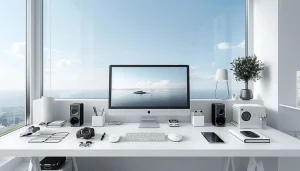
organized workspace reducing small interruptions and supporting a smooth daily routine
Visual Calm Supports Focus
A room does not need minimalism to feel calm.
But visual overload usually weakens focus over time.
Too many visible objects near the desk create small background signals competing for attention.
This includes:
• stacked paper
• decorative objects without purpose
• exposed cables
• mixed storage categories
An organized visual field allows the brain to identify the work zone more clearly.
That does not mean removing personality.
It means selecting what remains visible.
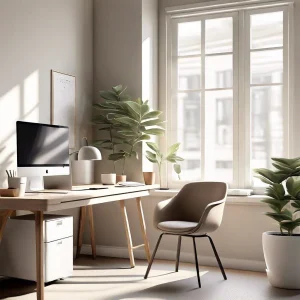
A single plant, one framed piece, or one shelf with intentional objects often supports the room better than many scattered elements.
This relationship between order and concentration becomes even stronger in smaller workspaces such as Small Home Office Ideas for Limited Space.
Storage Matters Only When It Matches Routine
Storage is useful only when it follows actual use.
Large storage without logic often becomes hidden clutter.
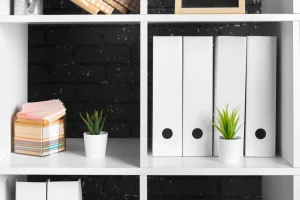
The strongest storage systems usually separate materials by frequency:
• daily use
• weekly use
• occasional access
Daily items should remain closest.
Occasional items should move away from the desk.
This prevents the work surface from becoming overloaded.
It also keeps the room visually lighter.
A practical drawer often performs better than decorative shelving when daily objects need immediate access.
The best storage rarely draws attention.
It simply removes friction.
Sound Conditions Affect Concentration More Than Expected
Many home offices receive attention visually but ignore sound completely.
Yet sound often shapes concentration more strongly than furniture.
A room near heavy circulation areas inside the house may feel difficult even if visually perfect.
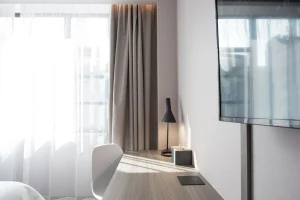
Soft materials help reduce sharp sound reflection:
• curtains
• rugs
• upholstered chairs
• fabric panels
These elements improve comfort quietly.
Even a bookshelf often softens sound naturally.
A productive office environment usually feels acoustically calmer even without special treatment.
The goal is not silence at all times.
It is reducing unnecessary sharp interruption.
Temperature and Air Quality Influence Long Hours of Work
A room that feels slightly warm or poorly ventilated often becomes tiring faster than expected.
Fresh air improves alertness.
Natural ventilation usually helps maintain comfort across longer work periods.
When windows are available, airflow often matters as much as light.
Air movement prevents heaviness.
Temperature also affects posture.
People shift more often when the room feels uncomfortable, which slowly affects focus.
The best workspace comfort factors often remain invisible until they are missing.

The Office Should Still Feel Connected to Home
One common mistake is trying to make a home office feel too detached from the house.
A workspace should support work, but it should still belong naturally to the home.
This balance often improves long term use.
If the room feels too rigid, fatigue increases.
A comfortable workspace usually includes one domestic element that softens the atmosphere:
• natural texture
• warm light
• soft material
• familiar object
These details make the office easier to inhabit for many hours.
This does not reduce professionalism.
It often improves it.
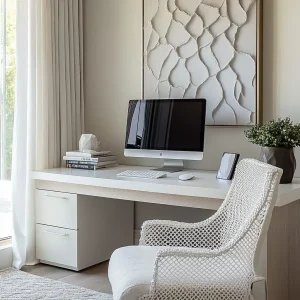
Small Adjustments Often Matter More Than New Furniture
Many people assume improvement requires replacing major pieces.
Often the strongest changes are smaller:
• adjusting lamp angle
• moving shelf height
• reducing desk objects
• changing chair distance
These adjustments improve daily comfort quickly.
Observation usually reveals what matters most.
After several workdays, patterns become clear.
Which objects are always used.
Which items interrupt movement.
Which surfaces collect unnecessary clutter.
A workspace improves when those signals are respected.
This principle also connects naturally with Home Office Organization Ideas, where small systems create lasting results.
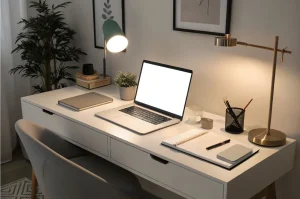
What People Often Notice Only After Months
Some home office qualities only become obvious after long use.
This includes:
• whether the room remains easy to reset
• whether light changes well through the day
• whether storage still works after routine changes
A good office does not remain static.
It adapts.
This is why the strongest workspaces allow revision without complete redesign.
A shelf may change function.
A drawer may need new division.
A lamp may move after seasonal light changes.
Flexibility is part of long term success.

Why Daily Ease Often Defines a Successful Workspace
A home office may look complete visually and still feel difficult to use if daily actions require constant adjustment. Small inconveniences often become more noticeable only after repeated work sessions because they interrupt concentration in subtle ways.
This may include reaching too far for common objects, working under inconsistent light, or lacking a simple place for temporary materials during the day.
When these details accumulate, the workspace begins to demand attention that should remain focused on work itself.
A successful office usually feels easy not because everything is perfect, but because most movements happen naturally without effort.
This is why many strong workspaces rely on observation more than decoration.
After several days of use, patterns become clear. Certain objects always remain near the desk, while others are rarely touched. Some areas stay functional, while others slowly collect unnecessary items.
These signals help identify what should remain visible and what should move into storage.
The same principle applies to comfort. A chair position that feels acceptable for one hour may become uncomfortable after three. A desk lamp that seems adequate at first may reveal shadows later in the day.
Over time, small corrections based on real use usually create stronger long term results than large changes made all at once.
When the office responds well to daily habits, the room becomes more stable, easier to maintain, and more consistent with real work needs.
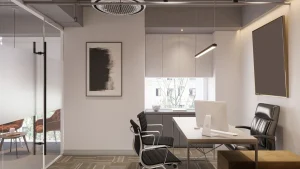
functional-workspace-supporting-effortless-daily-routine-and-consistent-focus
Conclusion
What matters most in a home office is rarely a single object or trend. It is the way the room supports ordinary routines without creating repeated effort.
When comfort, light, movement, and visual calm work together, the office becomes easier to use every day and remains effective even as work habits change.
Over time, the best workspace is usually the one that continues to feel natural, practical, and quietly supportive through daily use.
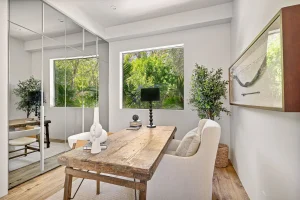
Home Office Essentials Often Become Clear Only After Daily Use
Many home office essentials only reveal their true importance after the workspace is used consistently over time. A room may appear complete at first, yet daily routines often expose which elements genuinely support comfort and focus.
This usually includes stable desk support, reliable lighting, accessible storage, and a chair that remains comfortable through longer work periods.
A productive office environment often depends on how easily these essentials work together rather than on how many objects are added to the room.
Even simple workspace comfort factors such as nearby charging access, controlled light reflection, and enough surface space can improve everyday performance significantly.
In many cases, practical home office setup decisions become more valuable than decorative upgrades because they directly reduce small interruptions that accumulate during the day.
When these essentials are chosen according to routine rather than appearance alone, the office becomes easier to maintain and naturally more effective over time.
FAQ
What is most important in a home office?
Comfort, light, and practical layout usually matter more than decoration alone.
Does a home office need a large room?
No. Small rooms often work very well when movement and storage are carefully planned.
How can a workspace improve focus?
Reducing visual clutter and improving desk position often help concentration.
Should a home office feel separate from the house?
It should support work clearly while still feeling naturally connected to the home.
Explore More Home Office Guides
If you want to continue improving your workspace, How to Create a Functional Home Office explains how layout decisions, furniture placement, and daily movement help create a workspace that performs well over time.
For compact environments, Small Home Office Ideas for Limited Space presents practical ways to use limited square footage without sacrificing comfort or usability.
If productivity is your main goal, Home Office Layout Ideas That Support Productivity explores how desk position, circulation, and visual balance influence daily concentration.
To strengthen long term maintenance, Home Office Organization Ideas That Improve Daily Workflow shows how storage systems and simple habits help keep the workspace consistently efficient.
You may also like reading the next article in this series as the home office cluster continues to grow with practical everyday solutions.