
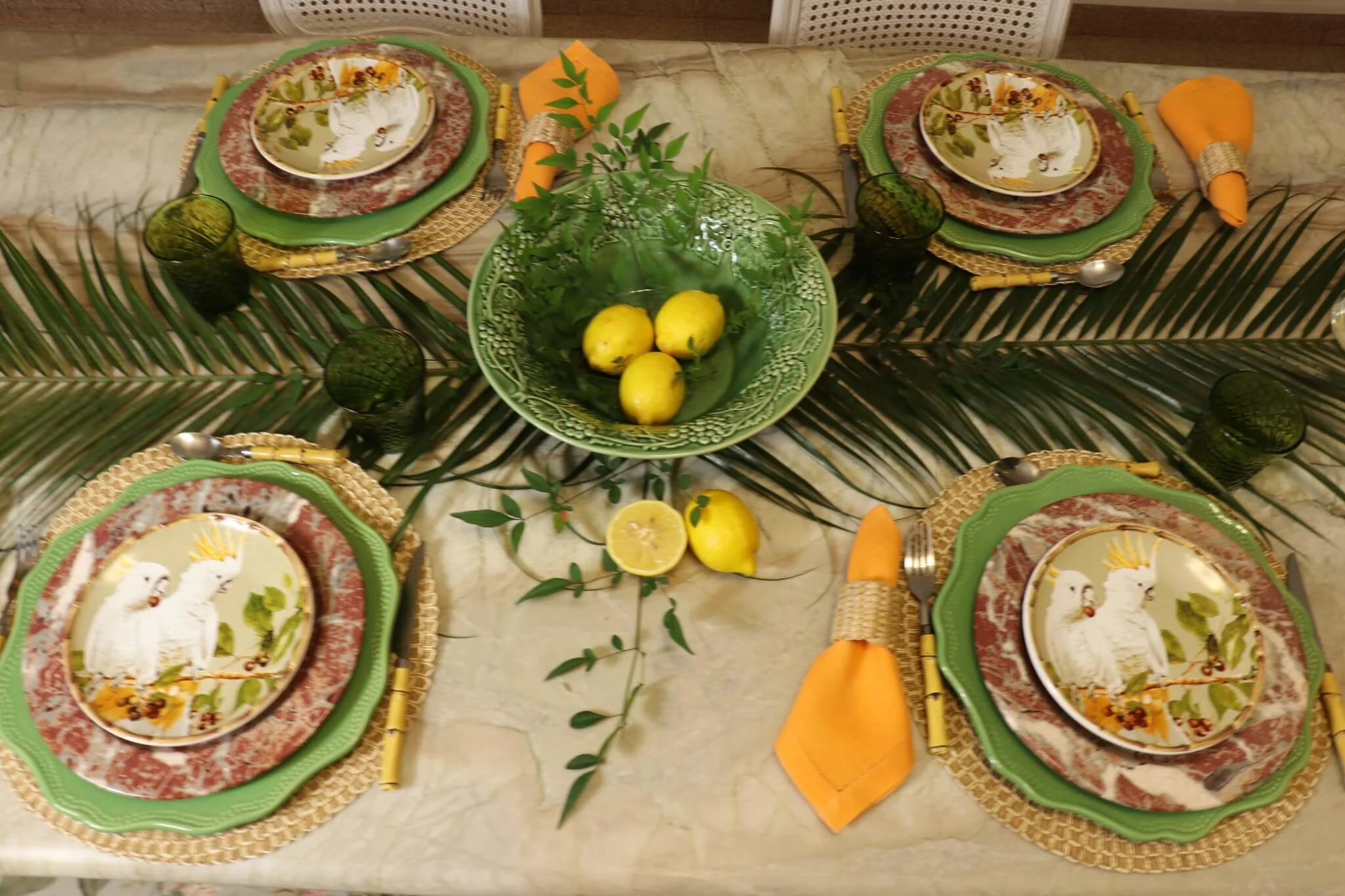
Beautiful tables are rarely defined by the number of plates they include. Instead, they create an immediate sense of depth, balance, and intention through carefully layered elements.
Each layer contributes something different to the composition.
A woven placemat introduces warmth.
A ceramic charger establishes the foundation.
The dinner plate provides structure.
The dessert plate adds personality and visual interest.
Together, these layers guide the eye naturally across the table, making each place setting feel complete without appearing overly formal.
One thing designers often notice is that layering is less about adding more pieces and more about creating visual rhythm. Every layer should have a purpose, helping the table feel inviting before anyone even sits down.
Start With a Strong Foundation
Every well-layered table begins with a foundation that anchors the entire composition.
In this setting, the natural woven placemat immediately introduces texture inspired by organic materials. Its soft, handcrafted appearance contrasts beautifully with the smooth ceramic surfaces placed above it.
The green ceramic charger becomes the visual bridge between the natural fibers and the dinnerware. Rather than dominating the table, it frames the remaining layers while reinforcing the botanical color palette.
On top of the charger, the marble-effect dinner plate adds subtle movement. Its delicate veining prevents the arrangement from feeling flat while maintaining a refined and timeless appearance.
Finally, the Cockatoo dessert plate becomes the focal point of each place setting. Its illustrated design introduces character, creating a decorative layer that feels expressive without overwhelming the composition.
Instead of competing with one another, these four elements build depth gradually. Each layer supports the next, allowing the table to feel collected, elegant, and effortless.
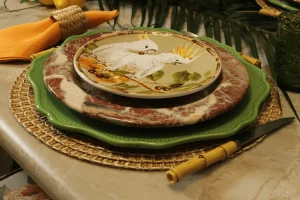
The layered composition begins with a natural woven placemat, followed by a green ceramic charger, a marble-effect dinner plate, and a decorative Cockatoo dessert plate. Each layer introduces a different texture, color, or visual function, creating depth without making the table feel heavy.
Discovery Moment: The Eye Notices the Layers Before the Individual Plates
When guests first approach a beautifully set table, they rarely identify each individual plate.
Instead, they perceive the overall rhythm created by repeating shapes, textures, and colors around the table.
Only after that first impression do they begin noticing the individual details.
This explains why layered place settings often feel more elegant than single plates, even when the dinnerware itself is relatively simple.
The eye naturally follows the repeated circular forms across the table, creating a sense of harmony long before anyone consciously analyzes the design.
One surprisingly simple observation is that elegance often comes from repetition rather than decoration.
Layer after layer, each place setting quietly reinforces the next, allowing the entire table to feel cohesive instead of busy.
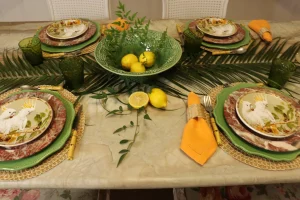
Layered-tropical-table-setting-with-green-dinnerware-lemons-and-natural-woven-placemats
Build Interest Through Texture, Not Just Color
One of the reasons this table feels rich without appearing excessive is the variety of textures used throughout the composition.
Natural woven fibers bring warmth.
Smooth glazed ceramics introduce refinement.
The marble-effect finish creates subtle visual movement.
Textured Zafferano Balloton glassware catches the light with delicate reflections.
Fresh lemons add an organic surface that contrasts beautifully with the polished tableware.
Although several shades of green appear throughout the table, texture is what prevents the palette from feeling repetitive.
Interior stylists often rely on this principle when creating memorable tables. Rather than introducing many different colors, they combine contrasting materials that allow even a restrained palette to feel layered and dynamic.
For readers interested in creating cohesive table arrangements, Natural Table Decor Ideas That Feel Fresh and Elegant #172 explores how natural materials bring warmth and balance to everyday dining tables.
Why the Centerpiece Should Support the Place Settings
A centerpiece should never compete with the table.
Its role is to connect every place setting into one harmonious composition.
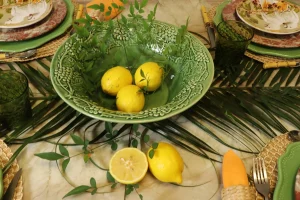
In this arrangement, a generous green Bordallo Pinheiro serving bowl becomes the natural focal point. Filled with fresh lemons and layered with lush greenery, it introduces height, color, and movement without overwhelming the dinnerware.
Notice how the greens in the foliage echo the ceramic charger, while the lemons repeat warm yellow accents that immediately brighten the entire table.
Rather than existing as an isolated decoration, the centerpiece strengthens the visual relationship between every place setting.
One thing experienced stylists often notice is that successful centerpieces don’t attract attention because they are large. They attract attention because they create harmony across the entire table.
When the centerpiece shares colors, materials, or natural elements with the dinnerware, the whole arrangement feels intentional from every angle.
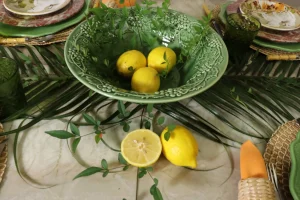
Green-Bordallo-Pinheiro-serving-bowl-with-fresh-lemons-and-greenery-centerpiece-on-a-layered-dining-table.
Nature Creates a Table That Feels Effortlessly Elegant
Natural elements have a unique ability to soften even the most structured table settings.
Fresh lemons introduce vibrant color while reinforcing the organic inspiration behind the entire composition.
Layered greenery creates movement that contrasts beautifully with the precise circular shapes of the plates.
Together, they prevent the table from feeling static or overly formal.
Instead of relying on elaborate floral arrangements, this table demonstrates how a few carefully chosen natural elements can achieve a richer visual effect.
One surprisingly simple trick designers use is to repeat natural materials throughout the composition.
The woven placemat reflects the texture of the greenery.
The ceramic pieces echo the organic character of the fruit.
The botanical illustration on the dessert plate reinforces the same nature-inspired story.
Rather than appearing as separate decorative choices, every element quietly supports the next.
That consistency is what makes the table feel sophisticated without looking overly styled.
The Biggest Mistake Isn’t Using Too Many Plates
Many people assume that layering plates automatically creates a formal table.
In reality, the number of plates is rarely the issue.
The most common mistake is combining pieces that have no visual relationship with one another.
Different colors, unrelated patterns, and conflicting materials can make even a simple place setting feel disconnected.
Successful layering depends on harmony.
Each piece should contribute something different while still belonging to the same visual story.
That may mean repeating a color, introducing complementary textures, or allowing one decorative plate to become the only patterned element on the table.
Editing also plays an important role.
Not every meal requires every layer.
Sometimes removing a single piece creates a lighter composition that feels more appropriate for everyday dining.
Beautiful table settings are rarely created by adding more.
They become memorable because every layer has a clear purpose.
For more inspiration on combining different dinnerware pieces with confidence, How to Mix Dinnerware Without Looking Mismatched #177 explores simple ways to create balanced place settings that feel collected rather than perfectly matched.
Decision Guide: Building Beautiful Layered Place Settings
Creating an elegant table becomes much easier when each layer serves a clear purpose.
If you’re setting the table for everyday meals, begin with a woven placemat and a dinner plate. This simple combination immediately adds warmth without making the table feel overly formal.
For casual gatherings, introduce a ceramic charger beneath the dinner plate. The additional layer creates depth while keeping the arrangement relaxed and welcoming.
If you’re hosting a special celebration, complete the place setting with a decorative dessert plate. A distinctive design, like the Cockatoo plate featured here, becomes a focal point that adds personality without overwhelming the table.
When working with patterned dinnerware, allow the remaining layers to stay simple. Neutral textures and solid colors help decorative pieces stand out while maintaining visual balance.
Above all, remember that successful layering is about intention rather than quantity. Every piece should contribute to the overall composition, creating a table that feels harmonious from the first glance.

Living With a Beautifully Layered Table
Layered place settings do more than elevate special occasions.
They change the way everyday meals feel.
A thoughtfully prepared breakfast becomes more inviting.
A quiet family dinner feels more intentional.
Weekend lunches stretch a little longer because the atmosphere encourages people to slow down and enjoy being together.
Many homeowners discover that they don’t need to reserve beautiful table settings for holidays or celebrations.
Simple layering transforms ordinary routines into moments worth appreciating.
One thing families often notice is that a carefully prepared table naturally encourages everyone to linger a little longer after the meal.
Conversations continue.
Coffee arrives without rushing.
The table becomes part of the experience rather than simply a place to eat.
That is one of the quiet strengths of thoughtful table styling.
It doesn’t change the menu.
It changes how people experience the time spent together.
Refresh Your Table Without Buying New Dinnerware
Creating a fresh table setting does not always require new plates.
Often, the greatest transformation comes from reimagining the pieces you already own.
Replace the centerpiece with seasonal fruit or fresh branches.
Change linen napkins to introduce a different texture or color.
Swap glassware to create a lighter or richer mood.
Rotate decorative dessert plates with the seasons while keeping the same foundation underneath.
Even small adjustments can give familiar dinnerware an entirely new character.
Interior stylists rarely redesign a table from the beginning every time they entertain.
Instead, they build on a consistent foundation and refresh only a few carefully selected elements.
This approach keeps the table feeling personal, timeless, and sustainable while allowing every gathering to have its own identity.
For more inspiration on creating memorable focal points, Centerpiece Ideas That Transform Everyday Tables #174 explores how natural arrangements can completely change the atmosphere of a dining table without making it feel overdecorated.

Checklist
Before layering plates, ask yourself these simple questions.
✔ Does each layer have a clear purpose rather than simply adding height?
✔ Have you balanced natural textures with smooth ceramic surfaces?
✔ Is there one decorative plate that naturally becomes the focal point?
✔ Does the centerpiece complement the place settings instead of competing with them?
✔ Have you repeated colors or materials across the table for a cohesive look?
✔ Is there enough open space for the table to feel elegant rather than crowded?
✔ Would the table remain practical and comfortable throughout the entire meal?
Conclusion
Layering plates is one of the simplest ways to bring depth, texture, and elegance to a table without relying on elaborate decorations. By thoughtfully combining natural materials, complementary dinnerware, and meaningful decorative details, each place setting becomes part of a harmonious composition that feels welcoming from the very first glance.
Rather than thinking of layering as a formal dining technique, consider it a way to add intention to everyday meals. A woven placemat, a ceramic charger, carefully chosen dinnerware, and natural elements can work together to create a table that feels warm, balanced, and effortlessly sophisticated.
The most memorable tables are rarely the most elaborate. They are the ones where every layer contributes quietly to the experience, making guests feel comfortable, relaxed, and inspired to linger a little longer.
Take Away
Beautiful layered tables are created through thoughtful composition rather than the number of plates used. When natural textures, balanced proportions, and carefully selected dinnerware work together, the result is a table that feels elegant, inviting, and timeless enough to enjoy throughout the year.
Frequently Asked Questions
What is the purpose of layering plates?
Layering plates creates visual depth and gives each place setting a more complete, refined appearance. Different materials and shapes work together to make the table feel balanced and welcoming.
Which plate should go on the bottom?
Most layered place settings begin with a woven placemat or charger, followed by the dinner plate and then a smaller salad or dessert plate. This order creates a stable visual foundation while allowing each layer to remain visible.
Do layered place settings only work for formal dining?
Not at all. Layering can be as simple as combining a placemat, a dinner plate, and one decorative accent plate. Even casual weekday meals can feel more inviting with just a few thoughtfully chosen layers.
How many plates should be layered?
There is no fixed rule. Two or three carefully selected layers are often enough to create depth while keeping the table comfortable and practical for everyday use.
How do you keep layered place settings from looking too busy?
Limit the number of patterns, repeat a consistent color palette, and introduce natural textures instead of adding unnecessary decorative pieces. Leaving some visual breathing room helps every layer stand out.
Continue Exploring Table Styling Ideas
Layering plates is just one way to create a table that feels welcoming, balanced, and memorable. As you explore different styling techniques, you’ll discover that texture, natural materials, thoughtful centerpieces, and carefully selected dinnerware all work together to transform everyday meals into meaningful experiences.
Continue exploring the Table Setting collection for more ideas on mixing dinnerware, creating beautiful centerpieces, and designing tables that feel elegant without becoming overly formal.
You May Also Like
- #173 Everyday Table Setting Ideas That Feel Effortless
- #177 How to Mix Dinnerware Without Looking Mismatched
- #172 Natural Table Decor Ideas That Feel Fresh and Elegant
- #174 Centerpiece Ideas That Transform Everyday Tables