
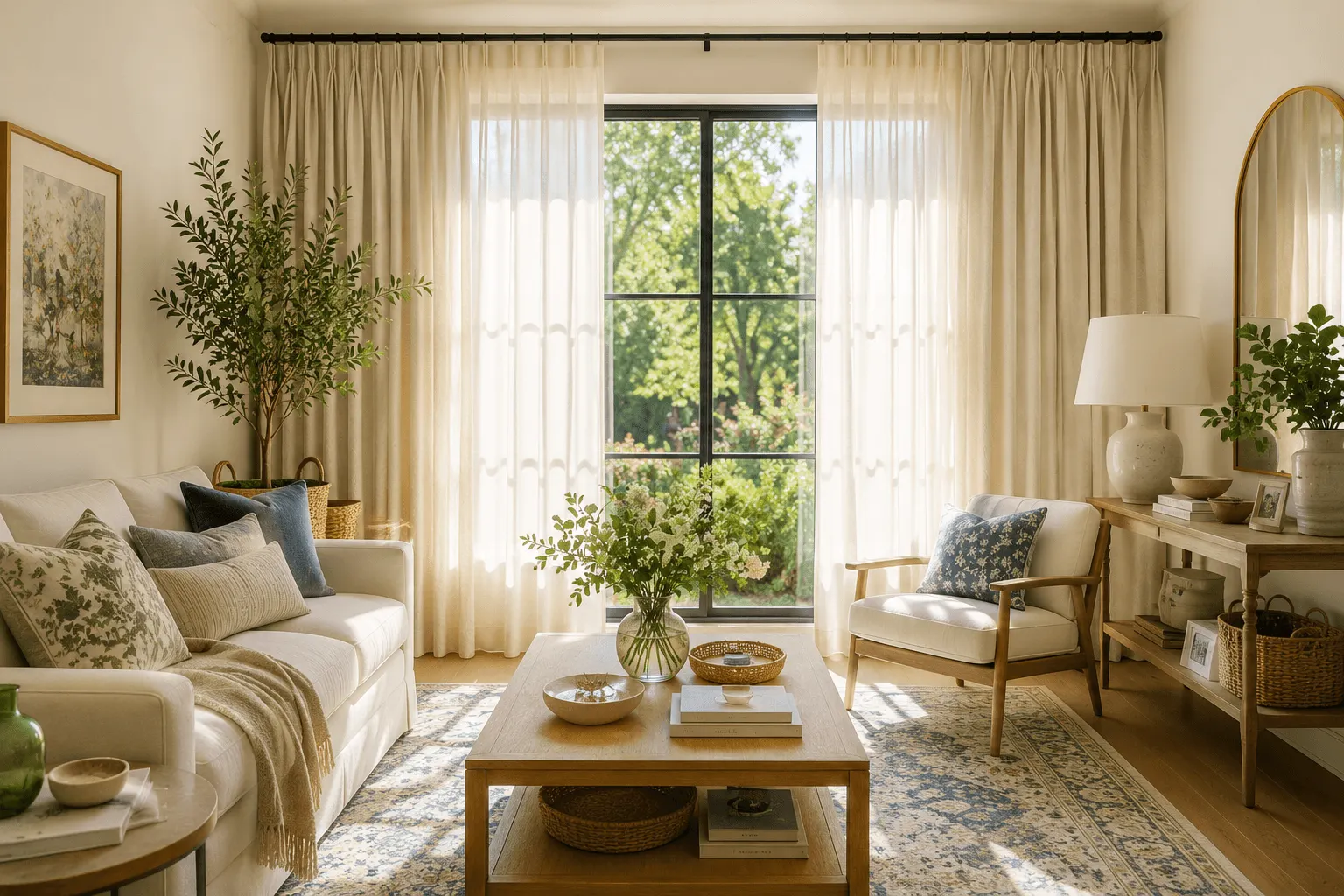
Introduction
Living room curtains influence far more than privacy or light control. The right curtains soften architecture, frame the windows, improve acoustics, and help the entire room feel balanced without overwhelming the décor.
- Well-chosen curtains create warmth while improving natural light.
- The right fabric, length, and color make a living room feel larger and more comfortable.
Many people think of curtains as the final decorative accessory.
In reality, they are one of the largest visual elements in the room.
Because they occupy significant vertical space, curtains influence how high the ceiling appears, how bright the room feels, and how comfortably the furniture connects with the architecture.
Choosing them carefully creates a living room that feels complete instead of simply decorated.
Why Living Room Curtains Matter More Than Most People Realize
Curtains are often treated as a finishing touch.
In reality, they help define the atmosphere of the entire room.
They soften natural light.
Reduce glare.
Improve privacy.
Absorb sound.
Frame outdoor views.
Balance large windows.
Even before furniture or decorative accessories are noticed, curtains influence how welcoming the room feels.
A thoughtfully selected fabric introduces movement and softness that painted walls alone cannot provide.
Rather than acting as an isolated decorative feature, curtains become part of the overall architectural composition.
Choosing the Right Fabric for Everyday Living
Fabric affects both appearance and functionality.
Lightweight linen creates an airy atmosphere while allowing daylight to filter naturally.
Cotton offers versatility and works well in both traditional and contemporary interiors.
Velvet provides greater insulation and introduces visual richness.
Sheer fabrics maximize brightness while maintaining privacy during the day.
Heavier woven textiles improve insulation and create a more intimate environment during the evening.
Instead of choosing fabric based only on appearance, consider how the room is actually used throughout the day.
A family room may require durable materials that tolerate frequent use.
A formal sitting room may prioritize elegance and softness.
Matching the fabric to daily routines creates better long-term satisfaction.
[IMAGE — Contemporary living room with floor-to-ceiling linen curtains filtering natural light]
How Curtain Length Changes the Room
Curtain length has a surprisingly large impact on visual balance.
Floor-length curtains naturally make ceilings appear taller.
Panels that stop above the floor often interrupt the vertical lines of the room.
For contemporary interiors, hanging the curtain rod closer to the ceiling rather than directly above the window creates the impression of larger windows and greater ceiling height.
Allowing curtains to gently touch the floor produces an elegant appearance.
A slight break at the bottom can introduce softness.
The objective is creating continuous vertical movement that visually expands the room.
Well-proportioned curtains contribute to architecture rather than simply covering windows.
Selecting Colors That Work With the Entire Room
Curtains should relate to the room as a whole instead of becoming an isolated feature.
Warm whites.
Soft beige.
Greige.
Sand.
Taupe.
Light gray.
These timeless colors coordinate easily with changing furniture and accessories.
Rather than matching the wall color exactly, choose a tone that complements the surrounding palette while introducing subtle depth.
Natural fabrics often provide enough variation through their weave that even similar colors never feel flat.
This approach keeps the room calm while allowing artwork, furniture, and textured materials to remain the primary focal points.
Balancing Privacy and Natural Light
One of the biggest challenges when selecting living room curtains is finding the right balance between privacy and daylight.
A room flooded with natural light feels larger, fresher, and more welcoming.
At the same time, complete exposure can reduce comfort, especially in homes with nearby neighbors or large street-facing windows.
Layering different curtain types often provides the best solution.
Sheer panels soften direct sunlight during the day while maintaining brightness.
Heavier drapes can be closed in the evening to increase privacy and create a more intimate atmosphere.
This layered approach also gives homeowners greater flexibility throughout changing seasons and different times of the day.
Instead of forcing one fabric to perform every function, each layer contributes to the room in its own way.
Using Curtains to Make a Room Feel Larger
Curtains can visually change the proportions of a living room.
Installing the curtain rod several inches above the window naturally draws the eye upward.
Allowing the fabric to extend beyond both sides of the window makes the glass appear wider.
Together, these simple adjustments create the illusion of a larger room without altering the architecture.
This strategy works particularly well in apartments and compact homes where maximizing the perception of space is important.
Rather than focusing attention on the window itself, the curtains become part of the entire wall composition.
The room immediately feels taller, lighter, and better balanced.
[IMAGE — Floor-to-ceiling curtains creating the illusion of taller ceilings]
Layering Curtains for Comfort and Flexibility
Layered window treatments combine practicality with elegance.
A sheer curtain closest to the window filters daylight while maintaining privacy.
A heavier outer panel adds warmth, improves insulation, and allows greater control over light levels.
This combination also introduces additional texture into the room.
Soft linen sheers contrast beautifully with woven cotton or velvet drapes.
Even when both fabrics share a similar neutral color, the difference in texture creates subtle visual richness.
Layered curtains also make seasonal adjustments easier.
Light fabrics can dominate during warmer months.
Heavier panels naturally create a cozier atmosphere during cooler seasons.
Instead of replacing curtains throughout the year, homeowners simply adjust how each layer is used.
Matching Curtains With Furniture and Textures
Curtains should support the rest of the living room rather than becoming an isolated decorative feature.
If the room already includes natural oak furniture, linen upholstery, and woven baskets, linen curtains reinforce that relaxed atmosphere.
Rooms featuring darker woods and richer fabrics may benefit from heavier woven drapes.
Repeating textures throughout the space creates continuity.
A linen sofa paired with linen curtains feels cohesive.
Wood tones repeated in curtain rods or woven shades strengthen visual harmony.
When materials complement one another, the room feels thoughtfully designed rather than assembled piece by piece.
Choosing Curtain Hardware That Complements the Design
Curtain rods and hardware deserve as much attention as the fabric itself.
Slim black metal rods work beautifully in contemporary interiors.
Brushed brass introduces warmth.
Natural wood rods reinforce organic decorating styles.
Simple hardware often allows the fabric to remain the primary visual element.
Oversized decorative finials can sometimes distract from otherwise elegant curtains.
Selecting hardware that echoes finishes already present in lighting fixtures, furniture, or shelving helps unify the room.
These small details quietly strengthen the overall composition without demanding attention.
[IMAGE — Contemporary curtain rod complementing neutral linen curtains and natural wood furniture]
Decision Guide: Which Living Room Curtains Are Right for Your Home?
Before choosing curtains, consider how you use the room every day.
Choose linen if you want a relaxed, timeless appearance with filtered natural light.
Choose cotton for durability and versatility.
Choose velvet if insulation, privacy, and a richer atmosphere are priorities.
Choose sheer curtains if maximizing daylight is your primary goal.
Choose layered curtains if you want flexibility throughout the day and across different seasons.
The best curtains are not simply the most fashionable.
They are the ones that improve comfort, complement the architecture, and continue working beautifully as the room evolves over time.
Common Mistake and How to Avoid It
One of the most common mistakes when choosing living room curtains is selecting them only after all the furniture has been purchased.
Although curtains are often viewed as accessories, they occupy one of the largest vertical surfaces in the room.
Ignoring their scale can disrupt the balance of the entire space.
Curtains that are too short interrupt the visual flow.
Fabric that is too heavy may overwhelm a compact room.
Panels that are too narrow often make windows appear smaller than they really are.
Instead, think of curtains as part of the architecture.
Measure carefully before purchasing.
Consider ceiling height, window proportions, natural light, and how the fabric will interact with the surrounding furniture.
A thoughtful decision creates a room that feels cohesive from floor to ceiling.
Living With the Space
Well-chosen curtains improve everyday comfort in ways that often go unnoticed until they are missing.
Morning sunlight becomes softer instead of harsh.
Afternoon glare no longer interferes with reading or watching television.
The room feels quieter because fabric naturally absorbs sound.
Even the temperature may become more comfortable as curtains help reduce heat gain during summer and provide additional insulation during cooler months.
These practical benefits explain why quality curtains remain valuable long after decorating trends have changed.
Instead of simply framing the windows, they quietly improve the experience of living in the room every single day.
How Living Room Curtains Evolve With Your Home
One of the greatest advantages of neutral, well-proportioned curtains is their ability to adapt as the room changes.
Furniture may be replaced.
Artwork may evolve.
Accessories naturally come and go.
Even wall colors can change over time.
Well-selected curtains continue working because they provide a timeless foundation rather than following temporary decorating trends.
Refreshing the room often becomes surprisingly simple.
New cushions introduce seasonal color.
A different rug creates another layer of texture.
Fresh plants bring life to the space.
The curtains continue connecting every element together without needing replacement.
This flexibility reduces future decorating costs while allowing the room to grow naturally alongside the people who live there.
[IMAGE — Neutral living room with timeless floor-to-ceiling curtains complementing evolving décor]
Choosing Curtains That Will Still Feel Beautiful Years From Now
Fashion changes quickly.
Interior design trends evolve.
Curtains, however, are usually expected to remain in place for many years.
For that reason, timeless decisions almost always outperform trendy ones.
Simple pleats.
Natural fabrics.
Neutral colors.
Quality craftsmanship.
Balanced proportions.
These characteristics rarely become outdated because they emphasize comfort rather than fashion.
Instead of asking whether a curtain style is currently popular, ask whether it will still complement your living room five or ten years from now.
Design choices based on longevity almost always create calmer, more satisfying interiors.
Checklist
Before choosing your living room curtains, ask yourself:
✔ Are the curtain rods installed close to the ceiling?
✔ Do the curtains reach the floor?
✔ Does the fabric match how the room is used every day?
✔ Is there a balance between privacy and natural light?
✔ Do the curtain colors complement the furniture and walls?
✔ Have you considered layering sheer and heavier fabrics?
✔ Will these curtains continue working if the room evolves in the future?
If most answers are yes, your curtains are likely contributing to both the beauty and functionality of the space.
You May Also Enjoy Reading
If you’re designing a living room that feels comfortable, timeless, and thoughtfully balanced, these articles continue building the same decorating approach.
Living Room Wall Decor That Feels Intentional
Read Living Room Wall Decor That Feels Intentional to discover how artwork, architectural details, and thoughtful styling create walls with lasting personality.
Neutral Living Room Ideas That Stay Interesting
Explore Neutral Living Room Ideas That Stay Interesting to learn how layered textures and natural materials make neutral interiors feel warm instead of plain.
How to Use Texture in a Living Room
Discover How to Use Texture in a Living Room and see how fabrics, wood, stone, and woven materials add depth, comfort, and timeless character.
Conclusion
Living room curtains do far more than cover windows. They influence light, privacy, comfort, acoustics, and the overall balance of the room. When carefully chosen, they become part of the architecture, connecting furniture, textures, and natural light into one harmonious composition.
Rather than treating curtains as the final decorating decision, consider them an essential design element. Selecting the right fabric, length, color, and proportion creates a living room that feels brighter, calmer, and more comfortable every day while remaining timeless as the rest of the home evolves.
Take Away
The best living room curtains combine beauty with everyday function. By choosing timeless fabrics, proper proportions, layered treatments, and colors that complement the entire room, you create windows that enhance comfort, soften the architecture, and continue adding value for many years.
Frequently Asked Questions
What are the best curtains for a living room?
Linen, cotton, and layered sheer curtains are among the most versatile choices because they balance natural light, privacy, and timeless style.
Should living room curtains touch the floor?
Yes. Floor-length curtains generally create a more elegant appearance and help make ceilings look taller.
Which curtain color works best in a neutral living room?
Warm white, cream, beige, greige, taupe, and soft gray coordinate easily with most neutral interiors.
Are sheer curtains enough for a living room?
Sheers work well when maximizing daylight is the priority. For greater privacy and flexibility, many homeowners combine sheers with heavier outer panels.
How high should curtain rods be installed?
Installing rods closer to the ceiling rather than directly above the window usually makes both the windows and the room appear larger.