
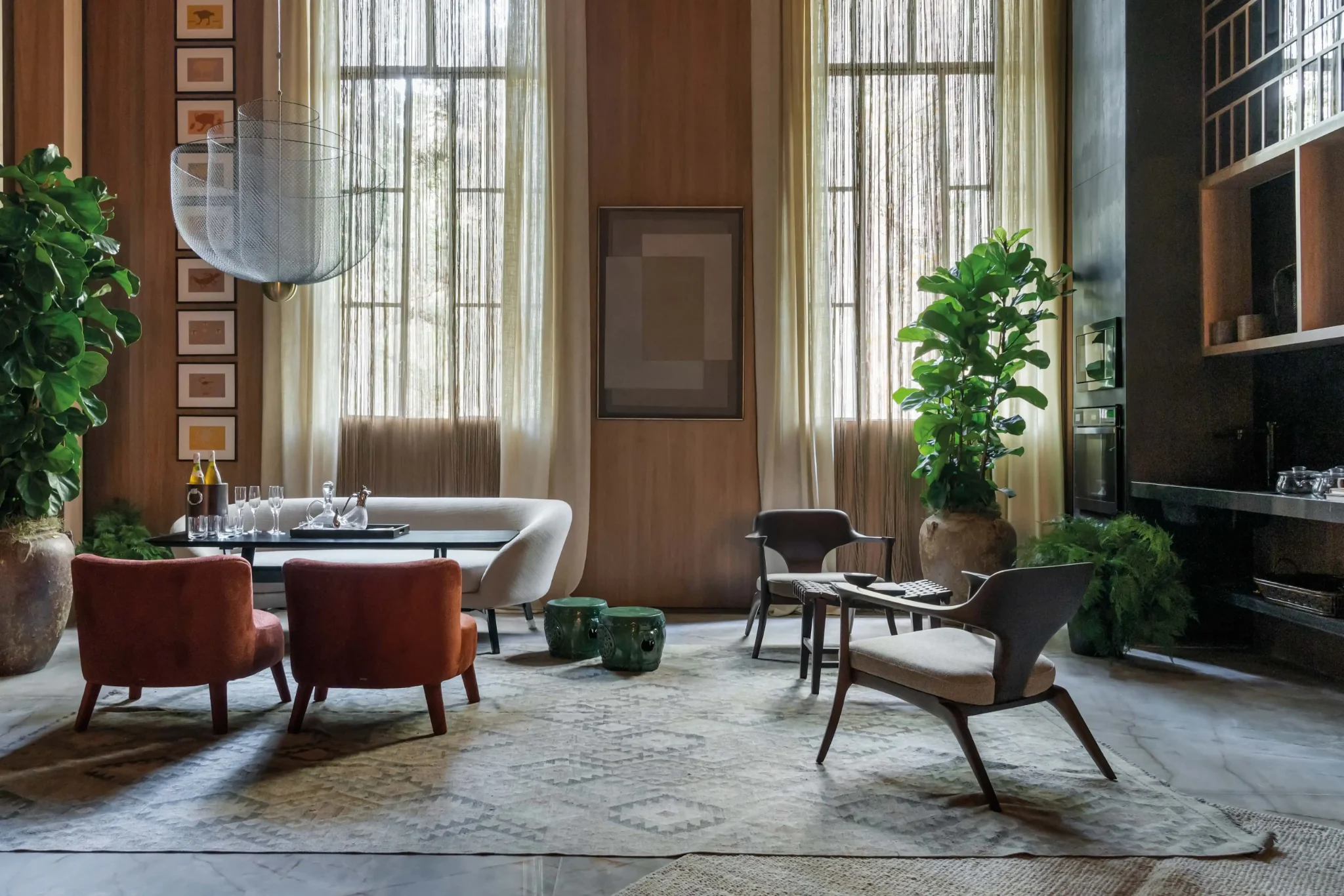
Many living rooms have attractive furniture, balanced colors and thoughtful layouts, yet still feel incomplete.
In many cases, the missing element is not another decorative accessory or piece of furniture.
It is the way the windows are dressed.
Curtains influence how light enters the room, how private the space feels and how comfortable the environment remains throughout the day.
They also affect visual proportions in ways many homeowners do not initially realize.
This living room curtains guide explains how to choose curtains that support everyday living while contributing to a balanced and welcoming interior.
In this article you will learn:
• Why curtains matter beyond decoration
• How different curtain styles affect comfort
• When to choose sheer or blackout fabrics
• How curtain length influences room proportions
• Practical ways to select curtains that fit real homes
The best curtains do not simply frame a window.
They help the entire room function better.
[IMAGE — horizontal rectangle]
Alt text: living room curtains guide showing floor length curtains creating balance and comfort
Why Curtains Matter More Than Many People Think
Curtains are often viewed as finishing touches.
In reality, they influence several important aspects of everyday life.
They affect privacy.
They control natural light.
They help regulate temperature.
They soften acoustics.
They influence how large or small a room appears.
Because they cover a significant vertical area, curtains often have more visual impact than smaller decorative elements.
A poorly chosen curtain can make a room feel heavy or unfinished.
A well-chosen curtain can improve comfort while strengthening the overall design.
This is why curtains should be considered part of the room’s functional planning rather than a final decorative decision.
Living Room Curtains Guide: Start With Daily Needs
Before comparing fabrics or colors, it helps to evaluate how the room is actually used.
Who spends time in the space?
What activities occur there?
When is sunlight strongest?
How important is privacy?
How often are the curtains opened and closed?
These questions often reveal which solutions will perform best.
A living room used primarily during the evening may have different requirements than a room occupied throughout the day.
Likewise, a home facing neighboring properties may prioritize privacy differently than one overlooking a private landscape.
Understanding daily routines creates a stronger foundation for decision-making.
Understanding the Main Types of Curtains
Different curtain styles serve different purposes.
Each offers unique advantages depending on the needs of the room.
Sheer Curtains
Sheer curtains allow natural light to enter while providing a degree of privacy.
They create a soft and airy atmosphere.
Many homeowners appreciate the way sheer fabrics diffuse sunlight throughout the room.
They work particularly well in living rooms where preserving brightness is a priority.
Blackout Curtains
Blackout curtains are designed to block significant amounts of light.
While commonly associated with bedrooms, they can also be useful in living rooms that receive intense sunlight.
They help reduce glare, improve privacy and contribute to temperature control.
Linen Curtains
Linen curtains remain popular because of their relaxed appearance and natural texture.
They introduce softness without feeling overly formal.
Linen works particularly well in interiors that emphasize natural materials and calm environments.
Cotton Curtains
Cotton offers versatility and accessibility.
It can be used in both traditional and contemporary interiors while providing a balance between softness and durability.
[IMAGE — horizontal rectangle]
Alt text: comparison of sheer linen and blackout curtains in living room settings
Sheer vs Blackout Curtains: Which Is Better?
One of the most common decisions homeowners face involves choosing between sheer and blackout curtains.
The answer depends on how the room functions.
Choose Sheer Curtains If:
• Natural light is a priority
• The room feels dark
• Privacy needs are moderate
• A lighter atmosphere is desired
Choose Blackout Curtains If:
• Glare is a concern
• Privacy is important
• Sun exposure is intense
• Temperature control matters
Consider Layering for Flexibility
Many living rooms benefit from combining both options.
Sheer curtains can remain closed during the day while preserving brightness.
Heavier curtains can provide privacy and light control when needed.
This layered approach often delivers the greatest flexibility.
How Curtain Length Changes the Feel of a Room
Length is one of the most overlooked curtain decisions.
Yet it can dramatically affect visual proportions.
Floor-Length Curtains
Floor-length curtains remain the most versatile option.
They create continuity and help windows feel larger.
Many designers consider them the safest choice for achieving a polished appearance.
Curtains That Slightly Touch the Floor
This approach creates softness while maintaining a tailored look.
It works particularly well in living rooms where elegance and practicality must coexist.
Short Curtains
Short curtains are less common in living rooms.
While they may work in specific situations, they often make windows appear smaller and less connected to the room.
In most cases, longer curtains create stronger visual results.
Using Curtains to Make a Room Feel Larger
Curtains can influence how spacious a room feels.
One of the most effective techniques involves mounting curtain rods higher than the window frame.
This creates the illusion of additional ceiling height.
Extending rods beyond the width of the window can also make windows appear larger.
The curtains remain partially outside the glass area when open, allowing more light to enter.
These adjustments require minimal investment yet often produce significant visual improvements.
The principle is similar to strategies discussed in Mirror Placement Guide (#103), where perception influences spatial experience as much as physical dimensions.
[IMAGE — horizontal rectangle]
Alt text: tall living room curtains creating the illusion of higher ceilings
Choosing Curtain Colors
Color affects both atmosphere and practicality.
Neutral curtains remain popular because they adapt easily to future decorating changes.
They also help maintain visual calm.
However, curtains do not always need to disappear into the background.
In some rooms, they can introduce subtle contrast or reinforce existing color palettes.
The key is understanding their role.
If the room already contains numerous focal points, calmer curtain colors often work best.
If the room feels visually flat, carefully selected color variation may add depth.
As explored in Living Room Color Guide (#100), balance usually creates more satisfying results than extremes.
Curtains and Everyday Comfort
Curtains influence comfort in several practical ways.
They soften sunlight.
They improve privacy.
They help regulate temperature fluctuations.
They can even reduce echo in rooms with hard surfaces.
These benefits often become more noticeable over time.
A room that receives harsh afternoon sunlight may become significantly more enjoyable once light is filtered appropriately.
Likewise, a space that feels exposed can become more comfortable when privacy improves.
Because curtains interact with daily routines so frequently, their impact often exceeds expectations.
Decision Guide: Which Curtains Are Right for Your Home?
Many homeowners become overwhelmed by the number of available options.
A practical decision-making framework can simplify the process.
Who uses the room most often?
What level of privacy is needed?
When does sunlight become strongest?
Where are the windows located?
Why does the current setup feel inadequate?
How often will the curtains be adjusted?
How much maintenance is acceptable?
These questions naturally guide better decisions.
For example:
A bright living room may benefit from layered curtains.
A small room may benefit from lighter fabrics.
A family room may prioritize durability.
A formal sitting area may focus more heavily on aesthetics.
The best curtain choice is usually the one that supports everyday living rather than current trends.
Curtains for Small Living Rooms
Small spaces require careful decisions.
Heavy fabrics can sometimes make compact rooms feel more enclosed.
Lighter materials often preserve openness.
Floor-length curtains generally perform better than short curtains because they emphasize vertical lines.
This creates the impression of greater height.
Neutral colors frequently contribute to a calmer atmosphere while allowing furniture and other decorative elements to remain visually balanced.
As discussed in Living Room Layout Guide (#99), visual flow often matters as much as square footage.
Curtains play an important role in supporting that flow.
[IMAGE — horizontal rectangle]
Alt text: small living room using light curtains to maximize brightness and openness
How to Choose Curtains Based on Lifestyle
One of the most effective ways to select curtains is to think beyond style and focus on how the room functions every day.
Many homeowners begin by asking which fabric looks best.
A more useful question is which curtain will perform best for the people who actually use the space.
A household with young children often benefits from practical and durable materials that are easy to maintain.
In these environments, curtains are frequently opened, closed and occasionally touched by curious hands. Fabrics that resist wrinkling and require minimal maintenance can make everyday life easier.
Homes with pets may face different challenges.
Long curtains that pool heavily on the floor can attract pet hair and require more frequent cleaning.
In these situations, floor-length curtains that lightly touch the floor often provide a better balance between appearance and practicality.
For people who work from home, controlling daylight may become a higher priority.
Strong sunlight can create glare on screens and make certain areas uncomfortable during parts of the day.
Layered curtains often provide the flexibility needed to adjust lighting conditions throughout the day without completely darkening the room.
Entertaining spaces may benefit from a different approach.
Living rooms used primarily for guests often place greater emphasis on atmosphere and visual impact.
Textured fabrics, decorative curtain rods and carefully chosen folds can contribute to a more refined appearance while still supporting comfort.
Seasonal changes should also be considered.
Rooms that receive intense summer sunlight may benefit from heavier fabrics that help reduce heat gain.
Homes located in cooler climates may appreciate curtains that contribute to insulation during colder months.
Thinking about these factors before making a purchase often leads to better long-term satisfaction.
The decision becomes less about following trends and more about supporting everyday routines.
This approach aligns with the broader principles discussed throughout Decor With.
The best decorating decisions are rarely based solely on appearance.
They are based on how a choice improves comfort, functionality and daily life.
When curtains support the way a household actually lives, they become more than window coverings.
They become part of a room that feels easier, more comfortable and more enjoyable to use every day.
Common Mistake and How to Avoid It
One of the most common mistakes is selecting curtains solely based on fabric samples.
A material that looks attractive in isolation may behave very differently when covering a large window.
Another mistake involves hanging curtains too low.
This can make ceilings feel shorter and reduce the visual impact of the windows.
The solution is simple.
Consider proportion.
Evaluate light conditions.
Think about daily use.
Then refine the aesthetic details.
Function should establish the foundation.
Style can complete the decision.
Living With the Space
Curtains become part of daily life in subtle ways.
Morning sunlight feels softer.
Privacy becomes easier to manage.
The room feels warmer and more complete.
These effects rarely draw attention to themselves.
Instead, they quietly improve the experience of living in the space.
The most successful curtains are often the ones homeowners stop noticing.
They simply perform their role effectively every day.
That balance between function and aesthetics is what makes window treatments such an important part of living room design.
Practical Checklist Before Choosing Curtains
✓ Evaluate natural light levels
✓ Identify privacy requirements
✓ Measure windows carefully
✓ Consider curtain length
✓ Choose appropriate fabrics
✓ Evaluate maintenance needs
✓ Think about long-term flexibility
✓ Coordinate with room colors
✓ Consider layering options
✓ Prioritize daily comfort
You May Also Like
Window Treatments Guide: Choosing the Right Balance of Light, Privacy and Comfort
Learn how different window solutions affect everyday living.
Mirror Placement Guide: Creating More Light, Balance and Visual Space
Discover how mirrors and curtains can work together to improve brightness and visual balance.
Home Lamps Guide: Creating Warmth Through Better Lighting
Explore lighting strategies that complement natural daylight and window treatments.
Conclusion
This living room curtains guide demonstrates that curtains are far more than decorative accessories.
They influence privacy, light control, comfort and the overall experience of living in a space. By choosing curtains that align with real household needs, homeowners can create rooms that feel more balanced, comfortable and functional throughout the day.
The best curtains do not simply decorate windows.
They help the entire room work better for everyday life.
Take Away
• Curtains influence comfort as much as appearance
• Natural light should guide decision-making
• Curtain length affects room proportions
• Layering often provides the greatest flexibility
• Practical choices usually create better long-term results
Frequently Asked Questions
What is a living room curtains guide?
A living room curtains guide helps homeowners choose curtains that improve privacy, comfort, light control and visual balance.
Should living room curtains touch the floor?
In most cases, yes. Floor-length curtains generally create a more balanced and polished appearance.
Are sheer curtains good for living rooms?
Yes. Sheer curtains help preserve natural light while providing a degree of privacy and softness.
What color curtains work best in living rooms?
Neutral colors remain versatile, but the ideal choice depends on the room’s palette, lighting conditions and desired atmosphere.
Should I combine sheer and blackout curtains?
Many homeowners find that layering sheer and blackout curtains provides the best balance of flexibility, privacy and light control.